Harriet Music Get the Ukulele app

Lesson 4 of 6 6 minutes

How to Hold a Ukulele Sitting and Standing

Harriet In this lesson you will hold the ukulele sitting and standing without squeezing the neck.

  1. 1. Meet your ukulele
    1. Lesson 1: Welcome: what you'll play
    2. Lesson 2: Meet your ukulele
    3. Lesson 3: Find the parts of your ukulele
    4. Lesson 4: How to hold the ukulele
    5. Lesson 5: Tuning with a tuner: G C E A
    6. Lesson 6: Tuning by ear
  2. 2. First sounds
    1. Lesson 1: The basic strum
    2. Lesson 2: Rhythm and timing: counting the beat
    3. Lesson 3: Fret hand: finger numbers and clean notes
    4. Lesson 4: Read your first chord diagram
    5. Lesson 5: Play your first chord: C major
    6. Lesson 6: Play along with C
    7. Lesson 7: Training your fingers
  3. 3. Your first chord changes
    1. Lesson 1: Add F major
    2. Lesson 2: Add G7
    3. Lesson 3: One-minute changes
    4. Lesson 4: Change chords without stopping
    5. Lesson 5: Play your first three-chord song
  4. 4. Strumming patterns and song charts
    1. Lesson 1: Add the up strum
    2. Lesson 2: Your first down-up pattern
    3. Lesson 3: Read a strumming chart
    4. Lesson 4: Follow a song chord chart
    5. Lesson 5: The island strum
    6. Lesson 6: Play a song with a new strum
  5. 5. More chords, more songs
    1. Lesson 1: Add A minor
    2. Lesson 2: Add G major
    3. Lesson 3: The C-G-Am-F progression
    4. Lesson 4: Make the four-chord loop flow
    5. Lesson 5: Song: Let It Be

Hold your ukulele with ease

A good hold keeps the ukulele steady without squeezing the neck. Your strumming arm supports the instrument while your fret hand stays relaxed. You will learn how to hold it sitting and standing, with the neck angled slightly upwards.

Work through these movements and positions to find a comfortable hold.
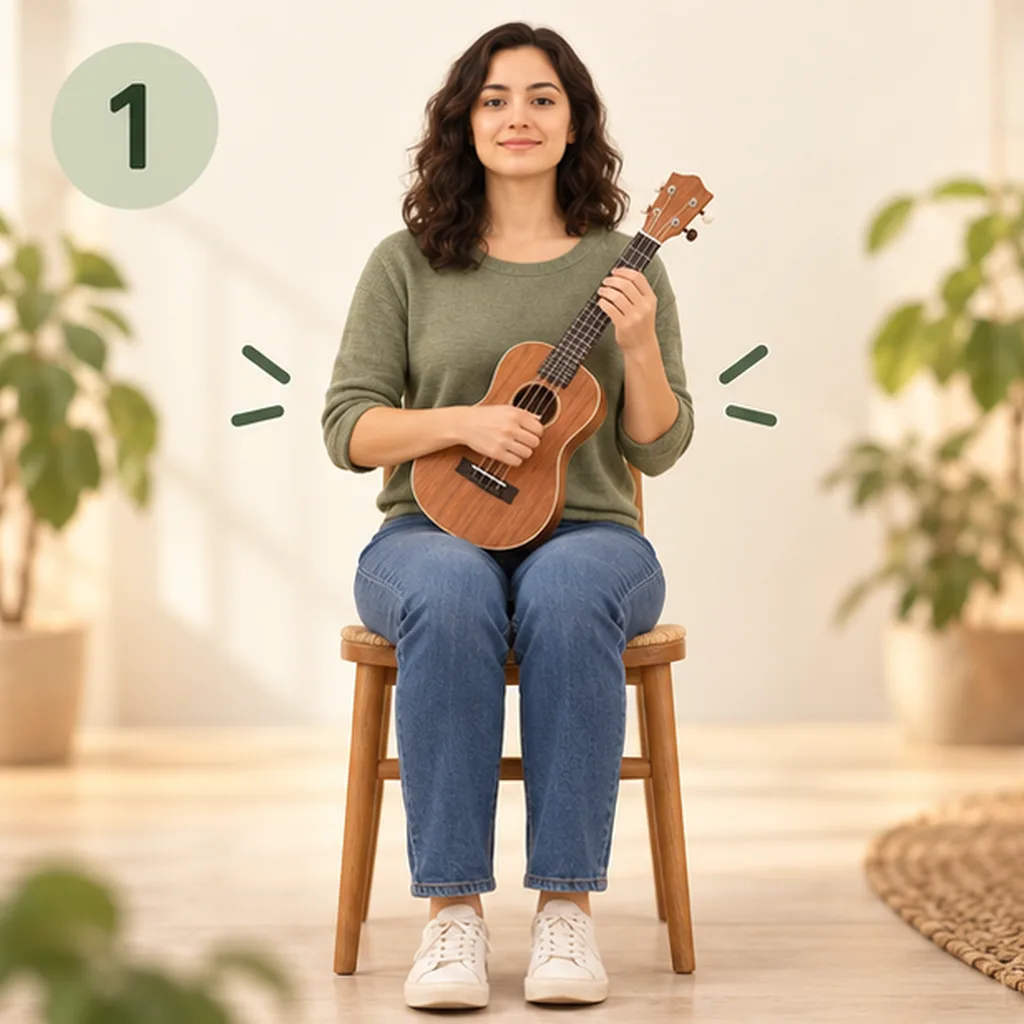
  1. Sit up straight with both feet on the floor and rest the ukulele against your chest.
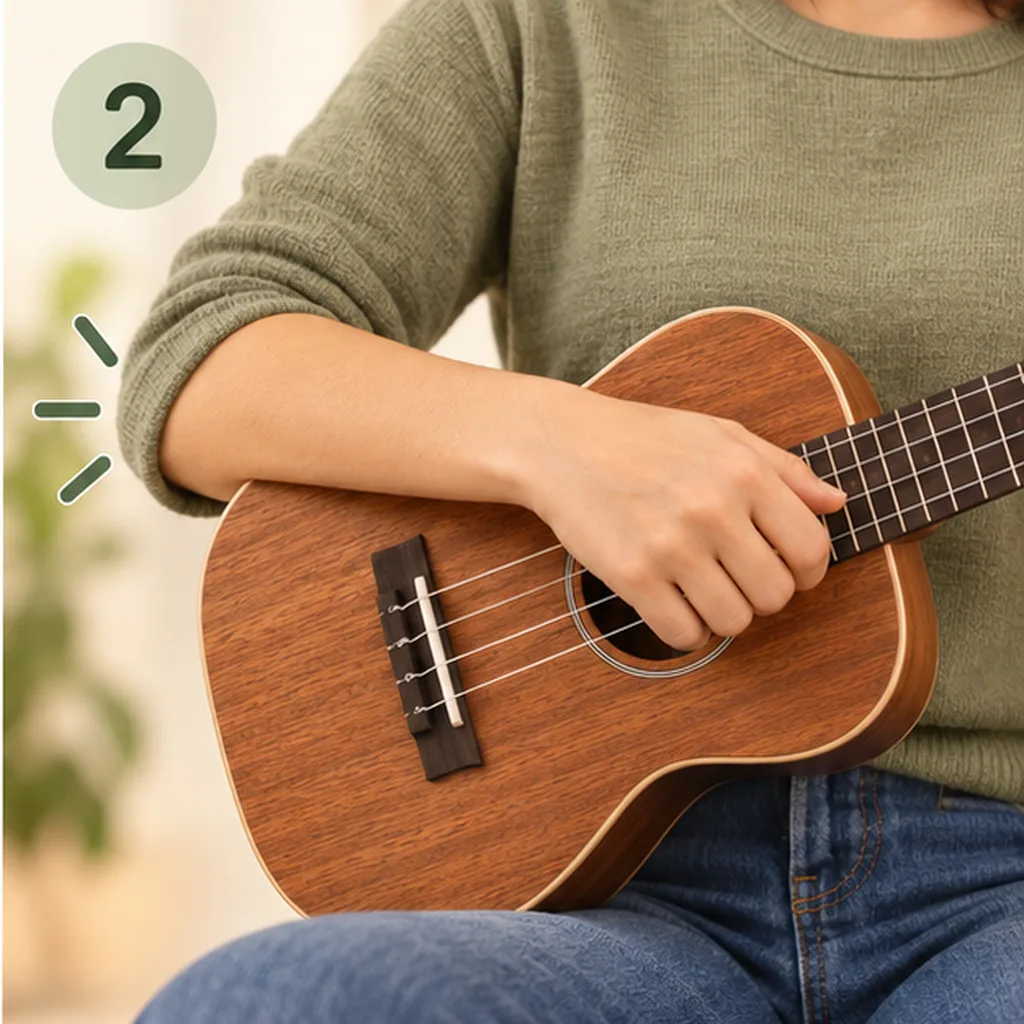
    Sit up straight with both feet on the floor and rest the ukulele against your chest.
  2. Lay your right forearm on the top edge of the body, near the bridge, so it gently pins the ukulele.
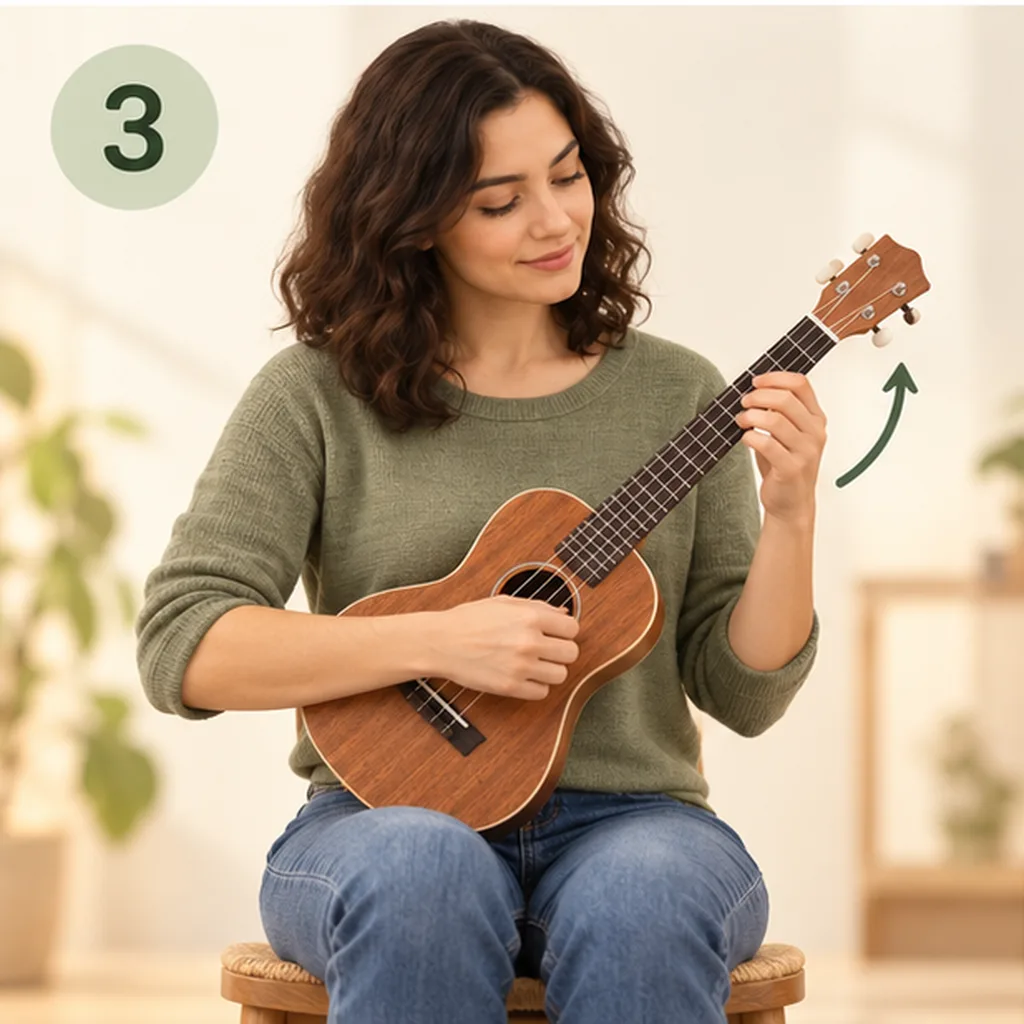
    Lay your right forearm on the top edge of the body, near the bridge, so it gently pins the ukulele.
  3. Angle the neck slightly upward; the strumming arm holds the instrument, not the fret hand.
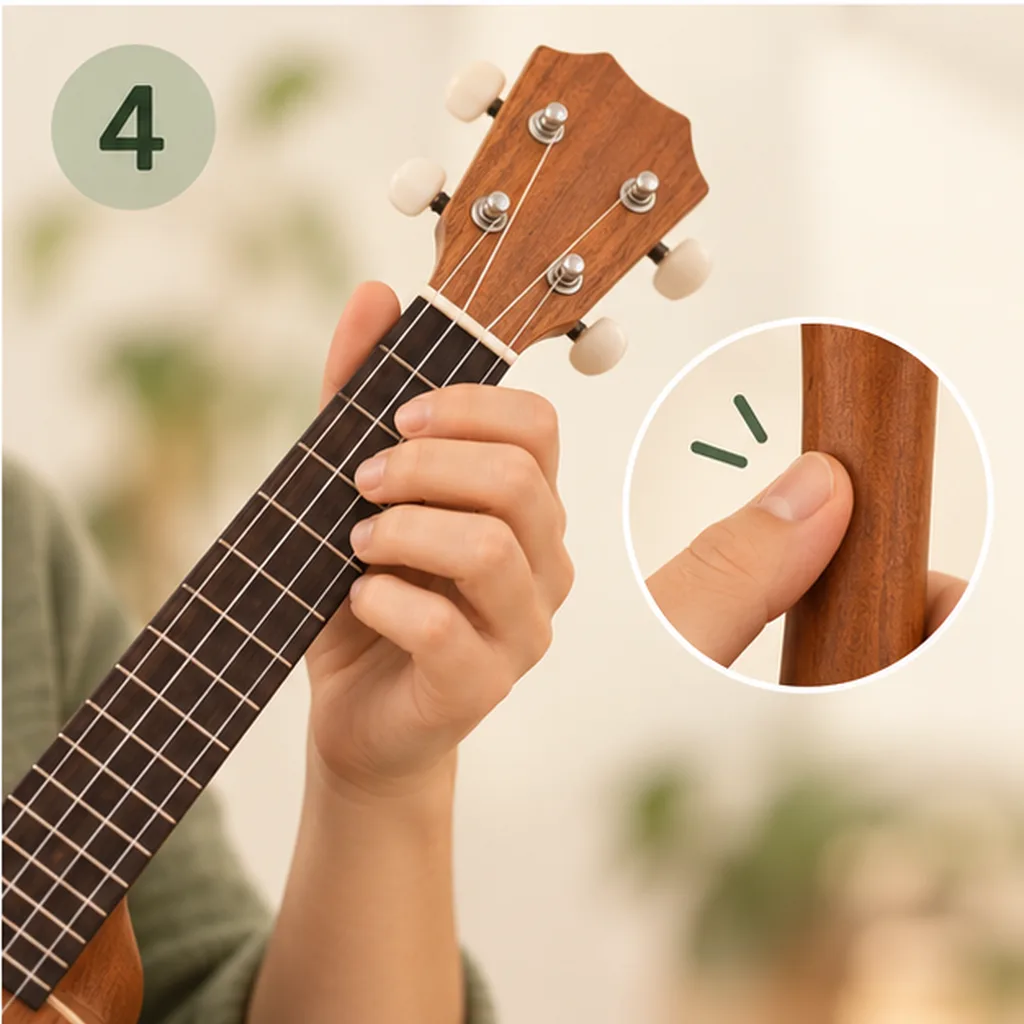
    Angle the neck slightly upward; the strumming arm holds the instrument, not the fret hand.
  4. Place the fret-hand thumb behind the neck, opposite the second fret, fingers curled over, wrist relaxed.
    Place the fret-hand thumb behind the neck, opposite the second fret, fingers curled over, wrist relaxed.

Sitting

Let the body of the ukulele rest against your chest, flat, not tilted away from you. Your strumming forearm lies across the top edge near the bridge and presses the instrument gently against you - that is what holds it. Angle the neck slightly upwards. Sitting down you need no strap.

Standing

Standing up, the forearm and the fret hand share the work, or you clip on a strap and stop thinking about it. A strap is not cheating; most players who sing use one.

The fret hand

The thumb sits behind the neck, roughly opposite the second fret, and the fingers curl over the top so the fingertips come down on the strings. Keep the wrist relaxed: a wrist bent hard forward will ache within minutes.

Never squeeze

The neck is never gripped. The strumming arm holds the ukulele; the fret hand only plays notes. If you let go with the fret hand and the ukulele starts to slide, move your forearm, not your thumb.

Play the video

The video plays from YouTube and belongs to its author.

Quick check

What holds the ukulele in place when you sit?
Show the answer

The strumming forearm, pressing it against your chest. The forearm lying across the top edge near the bridge pins the ukulele to your chest. The fret hand is then free to play.

2 more questions in the app Get the app

Practise in the free Ukulele app