Make each note clear
In this lesson, you’ll learn how finger position, pressure and picking affect the sound of a fretted note. Small adjustments can help you produce a clean, steady note on both strings of a course.
Hear the difference
In Fret Your First Notes, you learned to press both strings of a course. Now listen to the quality of the sound.
- Clear: the note rings freely with a steady pitch.
- Buzzing: you hear a rattling or vibrating noise alongside the note.
- Muted: the note sounds dull, weak or stops almost immediately.
Listen to the recorded E below. It gives you a reference for the pitch. Then try producing the same note on your mandolin and listen for unwanted noises.
Find the right contact point
Diagnose the problem
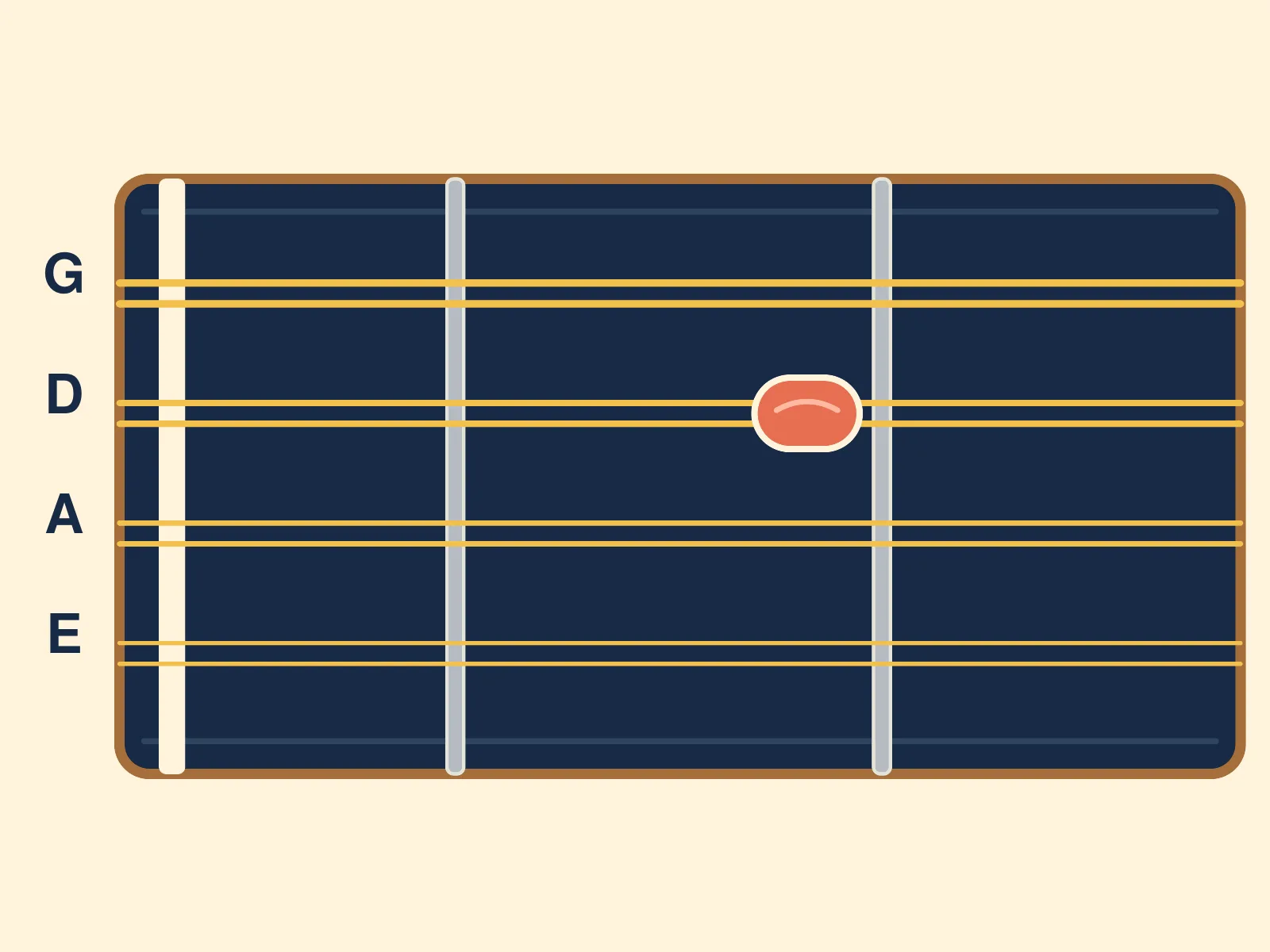
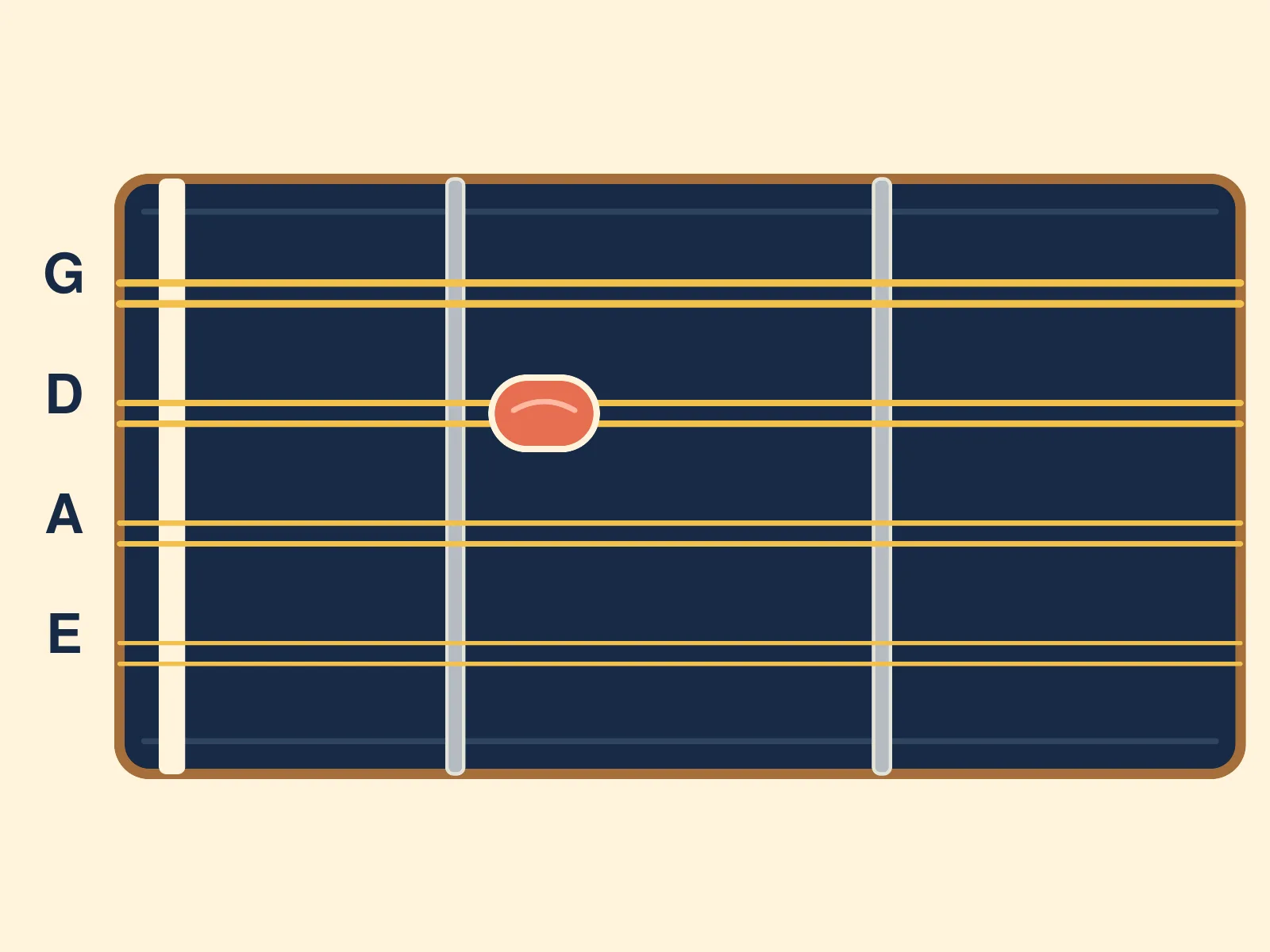
Buzzing? First check your position. Move slightly closer to the fret. If both strings still buzz, add a little pressure until they ring.
Muted or uneven? Check whether your fingertip reaches both strings without touching a neighboring course. Pick through the pair cleanly, without digging in.
Hand feels tight? You may be pressing too hard. Excessive pressure can cause tension and even pull the note slightly sharp.
Change one thing at a time so you can hear what helped.
Both strings, a relaxed hand
Emma Borders reminds you that the mandolin has two strings per course, so your fingertip must press both of them firmly enough to ring without buzzing. Firm enough is the goal, not as hard as you can. As you watch, look at how her other fingers stay relaxed and hover just above the strings.
 Play the video
The video plays from YouTube and belongs to its author.
Quick check
1 more question in the app Get the app