Harriet Music Get the Mandolin app

Lesson 1 of 9 8 minutes

What Is a Chord? Mandolin Chords Explained

Harriet In this lesson you will explain what a chord is and tell a melody played one note at a time from several notes sounding together as a chord.

  1. 1. Meet Your Mandolin
    1. Lesson 1: Meet the Mandolin
    2. Lesson 2: Parts of the Mandolin
    3. Lesson 3: Hold Your Mandolin
    4. Lesson 4: Choose and Hold Your Pick
    5. Lesson 5: Position Your Picking Hand
    6. Lesson 6: Learn the String Names
    7. Lesson 7: Tune Your Mandolin
  2. 2. Your First Notes
    1. Lesson 1: Play the Open Strings
    2. Lesson 2: Find the Frets
    3. Lesson 3: Fret Your First Notes
    4. Lesson 4: Get a Clean Sound
    5. Lesson 5: Use Your Fretting Fingers
    6. Lesson 6: Play Down and Upstrokes
    7. Lesson 7: Change Strings Cleanly
    8. Lesson 8: Coordinate Both Hands
    9. Lesson 9: Play Your First Melody
  3. 3. Read Tabs and Rhythm
    1. Lesson 1: Read Mandolin Tablature
    2. Lesson 2: Play Notes from Tab
    3. Lesson 3: Feel the Steady Beat
    4. Lesson 4: Count Notes and Rests
    5. Lesson 5: Practice with a Metronome
    6. Lesson 6: Read Simple Rhythmic Patterns
  4. 4. Your First Chords
    1. Lesson 1: Understand Mandolin Chords
    2. Lesson 2: Read Chord Diagrams
    3. Lesson 3: Play an Easy G Chord
    4. Lesson 4: Play an Easy C Chord
    5. Lesson 5: Switch Between G and C
    6. Lesson 6: Play an Easy D Chord
    7. Lesson 7: Strum Your First Chords
    8. Lesson 8: Change Chords in Time
    9. Lesson 9: Play a Three Chord Song
  5. 5. Strumming and Rhythm
    1. Lesson 1: Build Your Strumming Motion
    2. Lesson 2: Play Continuous Down Up Strums
    3. Lesson 3: Play Eighth Note Rhythms
    4. Lesson 4: Learn Common Strumming Patterns
    5. Lesson 5: Strum in Three Quarter Time
    6. Lesson 6: Accent the Right Beats
    7. Lesson 7: Accompany a Simple Song
  6. 6. Your First Tunes
    1. Lesson 1: Play Short Musical Phrases
    2. Lesson 2: Learn a Tune by Ear
    3. Lesson 3: Connect Musical Phrases
    4. Lesson 4: Play a Simple Folk Tune
    5. Lesson 5: Play Easy Cripple Creek
    6. Lesson 6: Practice at Different Speeds
    7. Lesson 7: Play a Complete Tune
    8. Lesson 8: Try Your First Tremolo

From one note to several

In Play a Melody from Tab you played a melody: one note, then the next, then the next, such as B at fret 2 of the A course. Each note sounds on its own.

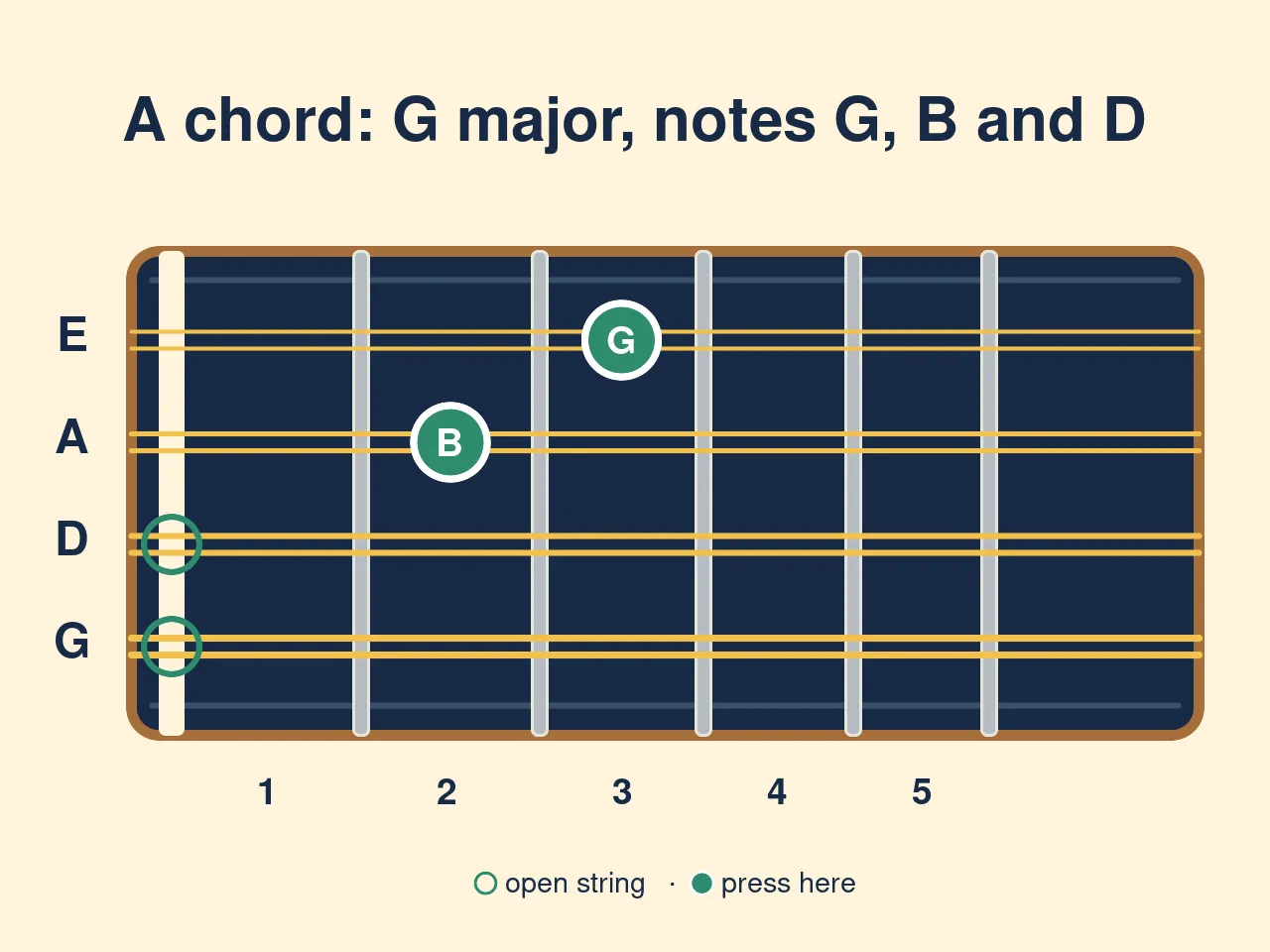
A chord is different: several notes sound at the same time. You strike them together, and your ear hears them as one rich sound.

One note or a chord
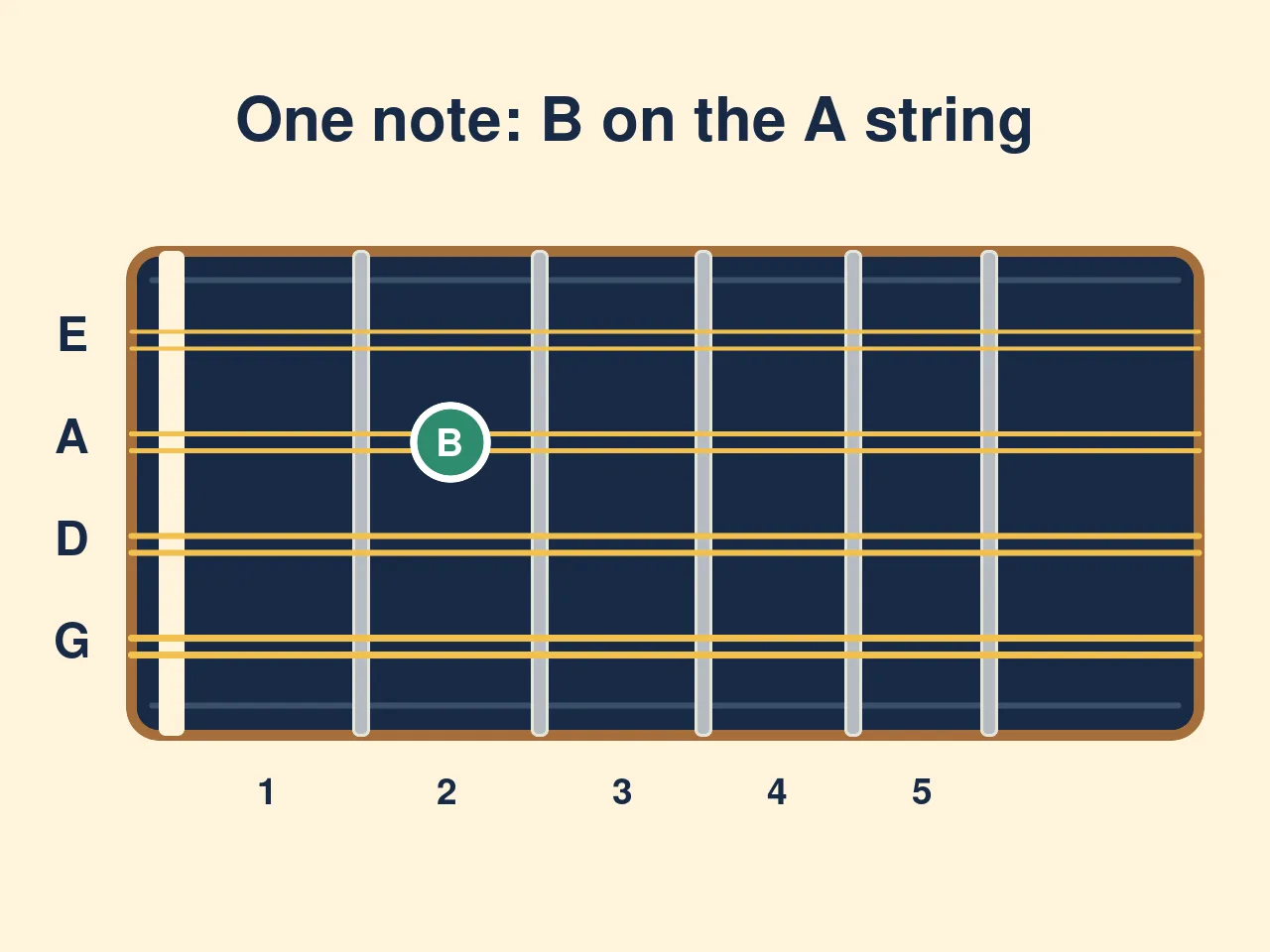
A melody plays one position at a time, like this single B.
G major sounds G, B and D together. G appears twice, an octave apart; you do not need to memorise these notes yet.
One note: B on the A string. This is what a melody is made of.
A G major chord: several notes ringing together.

What chords do

  • Chords give a song its harmony: the background colour under the tune.
  • While someone sings or plays the melody, chords support it. Much of the time on mandolin you will be the one playing those chords.

Not every course every time

A chord is about which notes sound together, not how many strings you hit. Some chords use all four courses, others only two or three. You will meet real shapes in Read Chord Diagrams and Play an Easy G Chord.

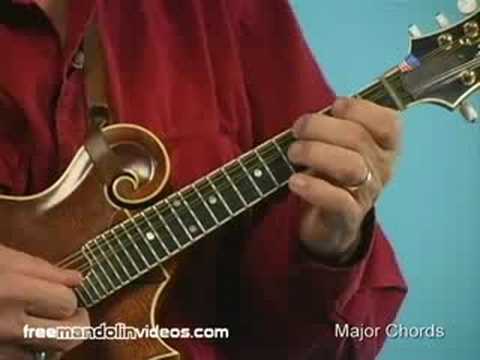
In this video, a mandolin teacher explains what chords are. Listen for the idea of several notes sounding together.
Play the video

The video plays from YouTube and belongs to its author.

Quick check

What makes a chord different from a melody?
Show the answer

In a chord several notes sound at the same time. A melody is one note after another; a chord is several notes together.

1 more question in the app Get the app
Practise in the free Mandolin app