Find your playing position
A good playing position keeps your mandolin steady while allowing both hands to move freely.
Start with three things:
- Relax your shoulders.
- Support the body of the mandolin.
- Keep the neck angled gently upward.
You should not need to squeeze the neck to stop the instrument from moving.
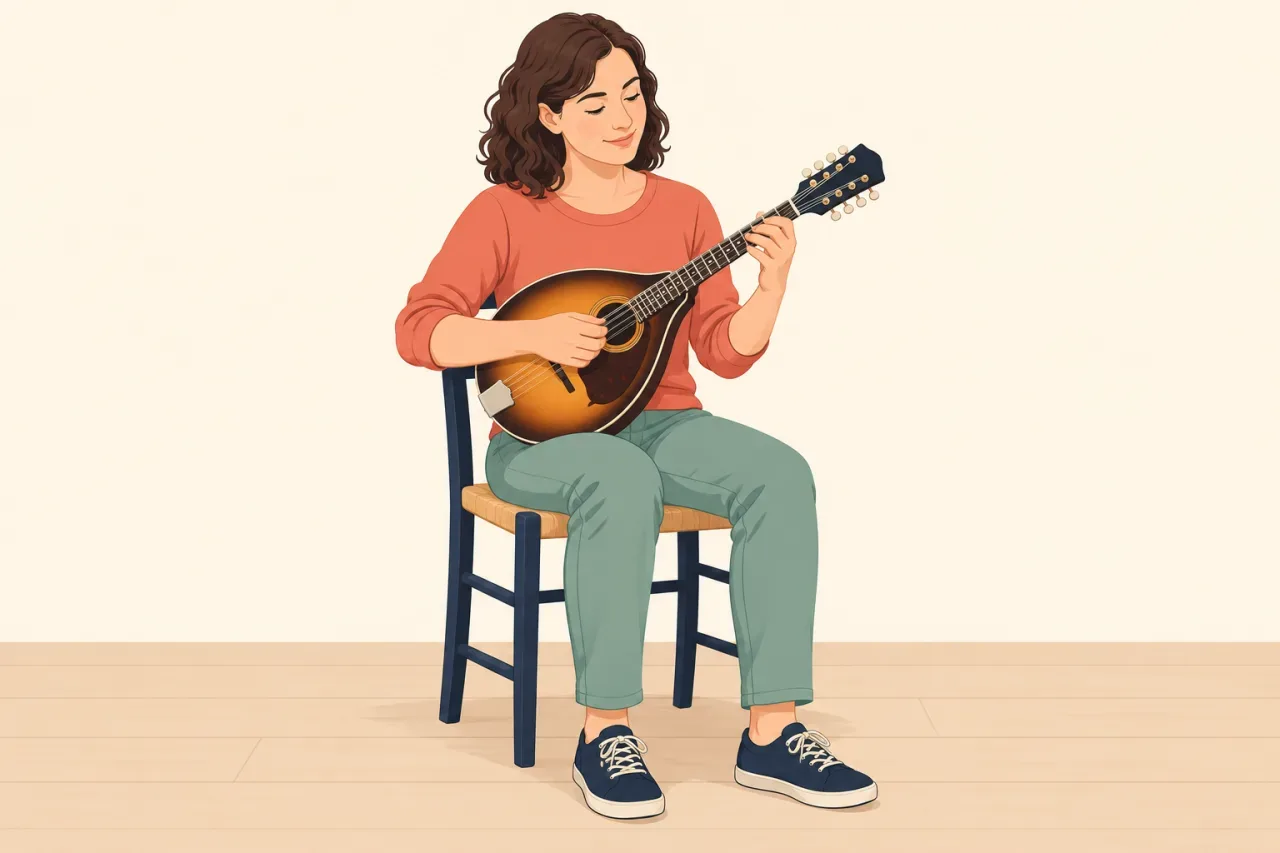
Support the body, not the neck
While sitting, rest the mandolin comfortably against your torso and use your picking-side forearm to help keep it steady.
A slight outward tilt can prevent the back from being pressed tightly against your stomach.
Let the neck rise at a comfortable angle. Around 45 degrees is a useful starting reference, but your wrists and shoulders should decide what feels natural.
Watch the position in action
In this video, Jackson Emmer demonstrates how to support the mandolin, adjust its neck angle and position the fretting hand. Notice how his forearm helps stabilize the body and how he avoids holding the neck too tightly.
He also explains why some mandolins may benefit from a strap.
 Play the video
The video plays from YouTube and belongs to its author.
What changes when standing?
A suitable strap can help carry the mandolin's weight and keep the body from sliding.
Adjust it so the instrument sits at approximately the same comfortable height as when seated. Keep your shoulders relaxed and avoid reaching upward or bending your wrist sharply to reach the neck.
Make sure the strap is securely attached before letting it support the instrument.

Relaxed wrist or forced position?

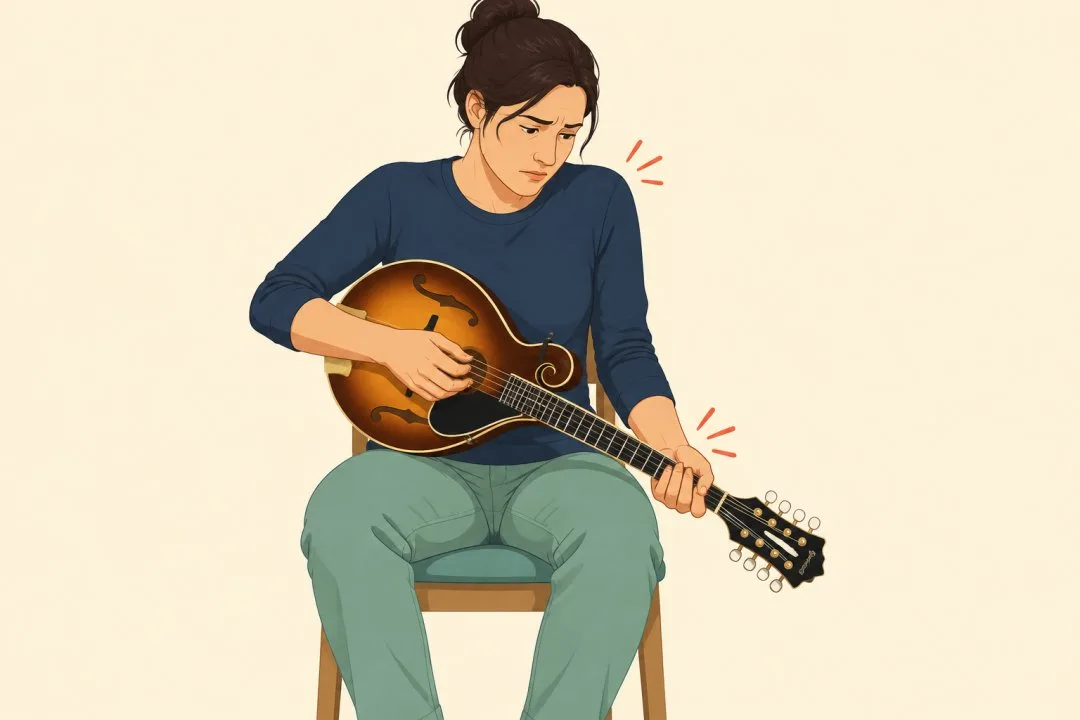
Quick check
2 more questions in the app Get the app