Eight strings to tune
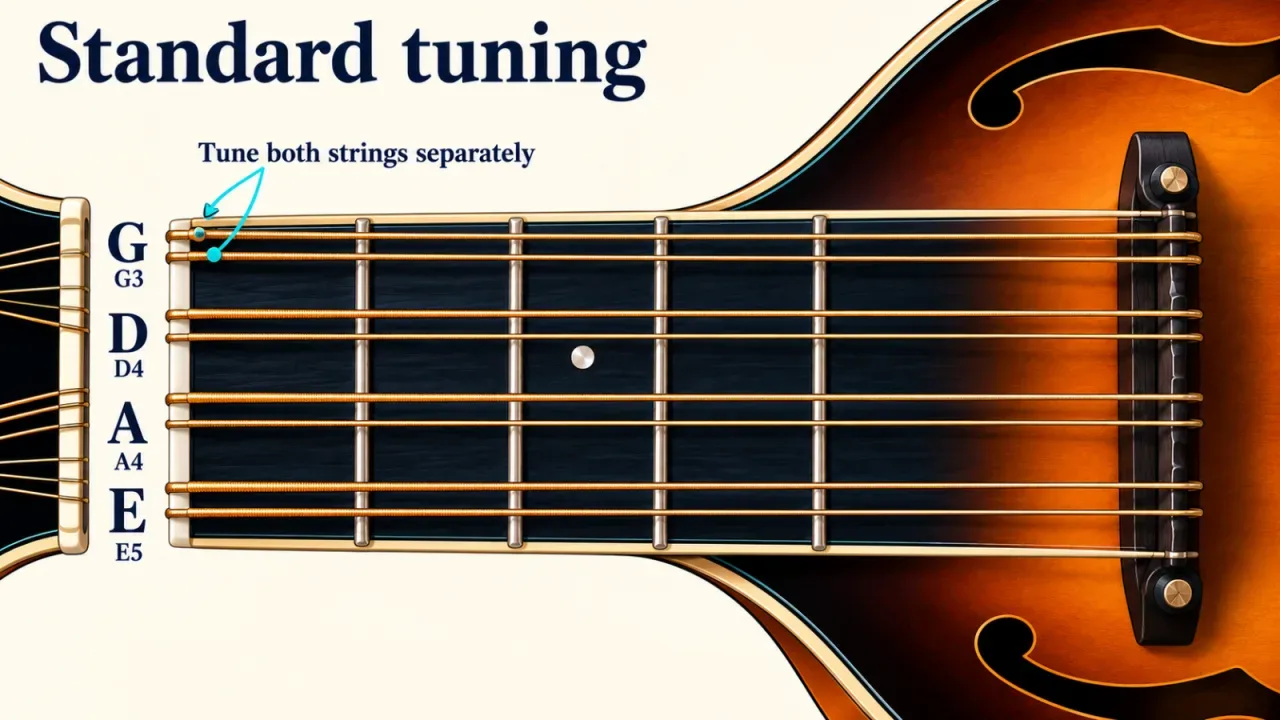
You already know the four courses: G, D, A, E. Now you'll tune them with an electronic tuner.
Each course contains two strings. Although they share the same note, you must tune each string separately.
Work from G to E, checking both strings of each pair before moving on.
Read the tuner
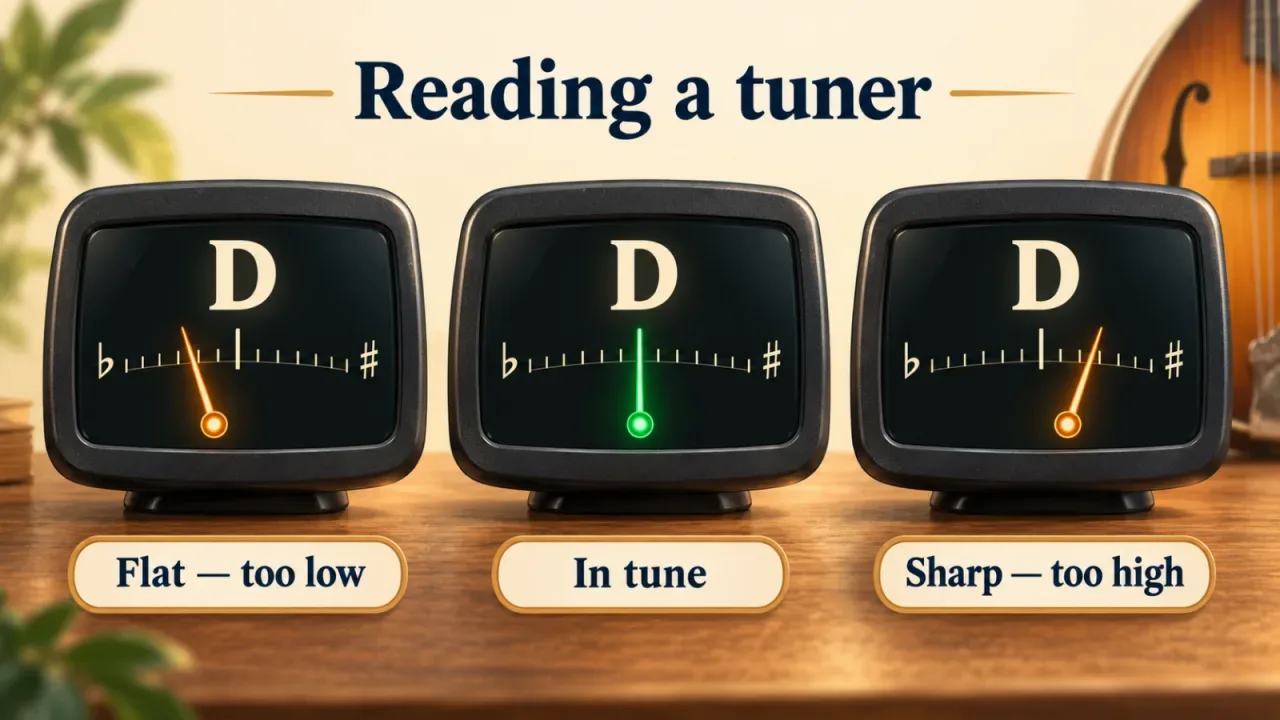
A chromatic tuner listens to a string and shows the note it hears, along with how close the pitch is to the target.
- Flat (♭): The pitch is too low. Tighten the string slightly to raise it.
- Sharp (♯): The pitch is too high. Loosen the string to lower it.
- In tune: The correct note is centered on the display, usually with a green indicator.
First make sure the note name is correct. A centered reading for the wrong note does not mean the string is properly tuned.
Tune one string at a time
- Start with one string of the G course. Follow it to the headstock to identify its tuning machine.
- Gently touch the other G string with a finger to mute it. Sound only the string you're tuning.
- Watch the tuner. Turn the correct tuning machine a little, then sound the string again. Tightening raises pitch; loosening lowers it.
- If you go sharp, loosen the string until it is slightly flat, then tune upward carefully to the target.
- Repeat with the other G string. Then follow the same process for D, A and E.
In this video, Guitar Compass demonstrates how the tuning machines change pitch and why you should identify the correct machine before turning it. The instructor uses reference sounds; here, you'll use the electronic tuner instead.
 Play the video
The video plays from YouTube and belongs to its author.
Quick check
3 more questions in the app Get the app