Your ears as the tab
In Play Short Musical Phrases you read a phrase from tab and gave it shape. This time there is no tab to read.
Learning by ear means hearing a melody and finding its notes on the mandolin yourself. Most folk and fiddle tunes are passed on this way.
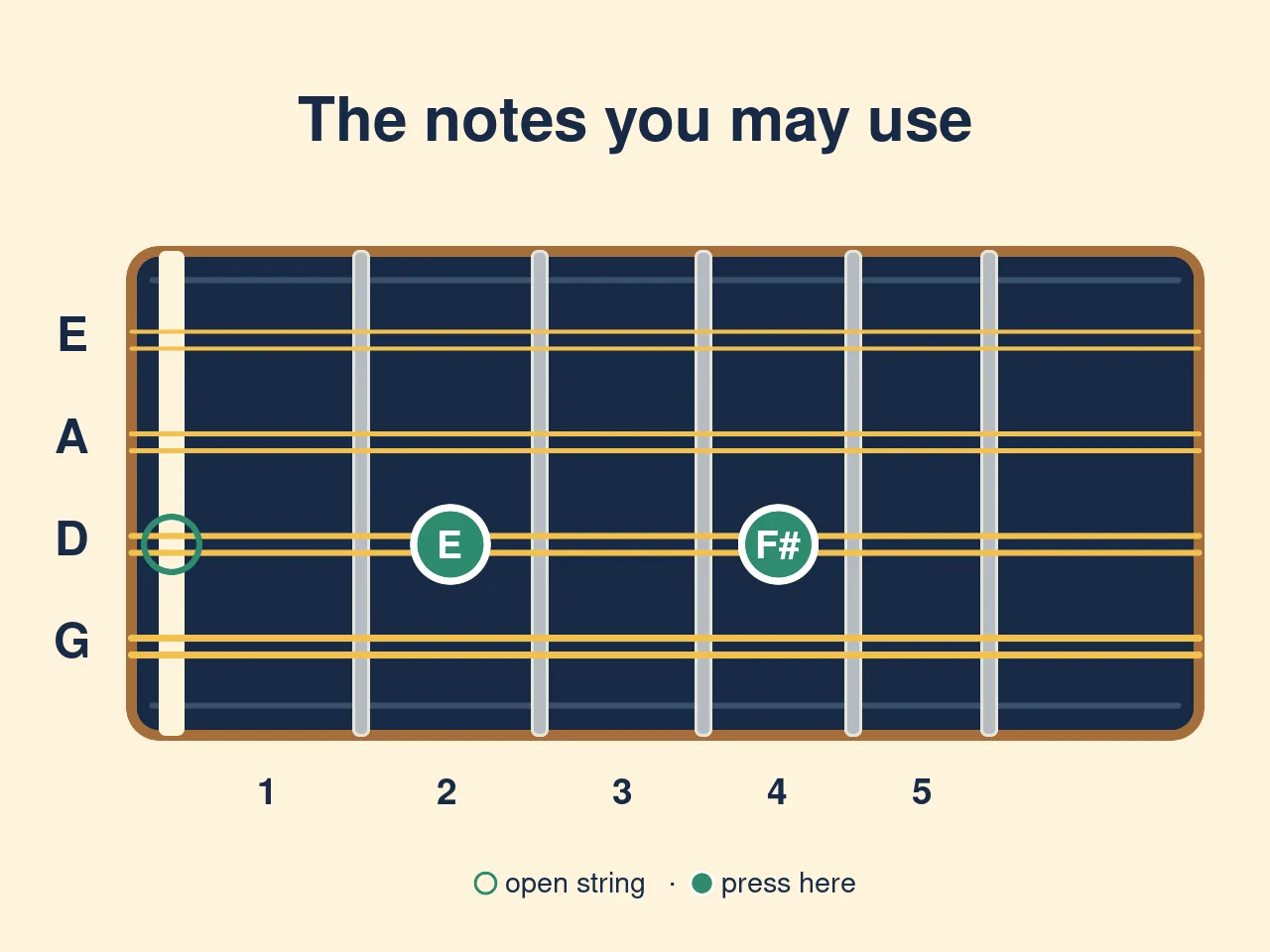
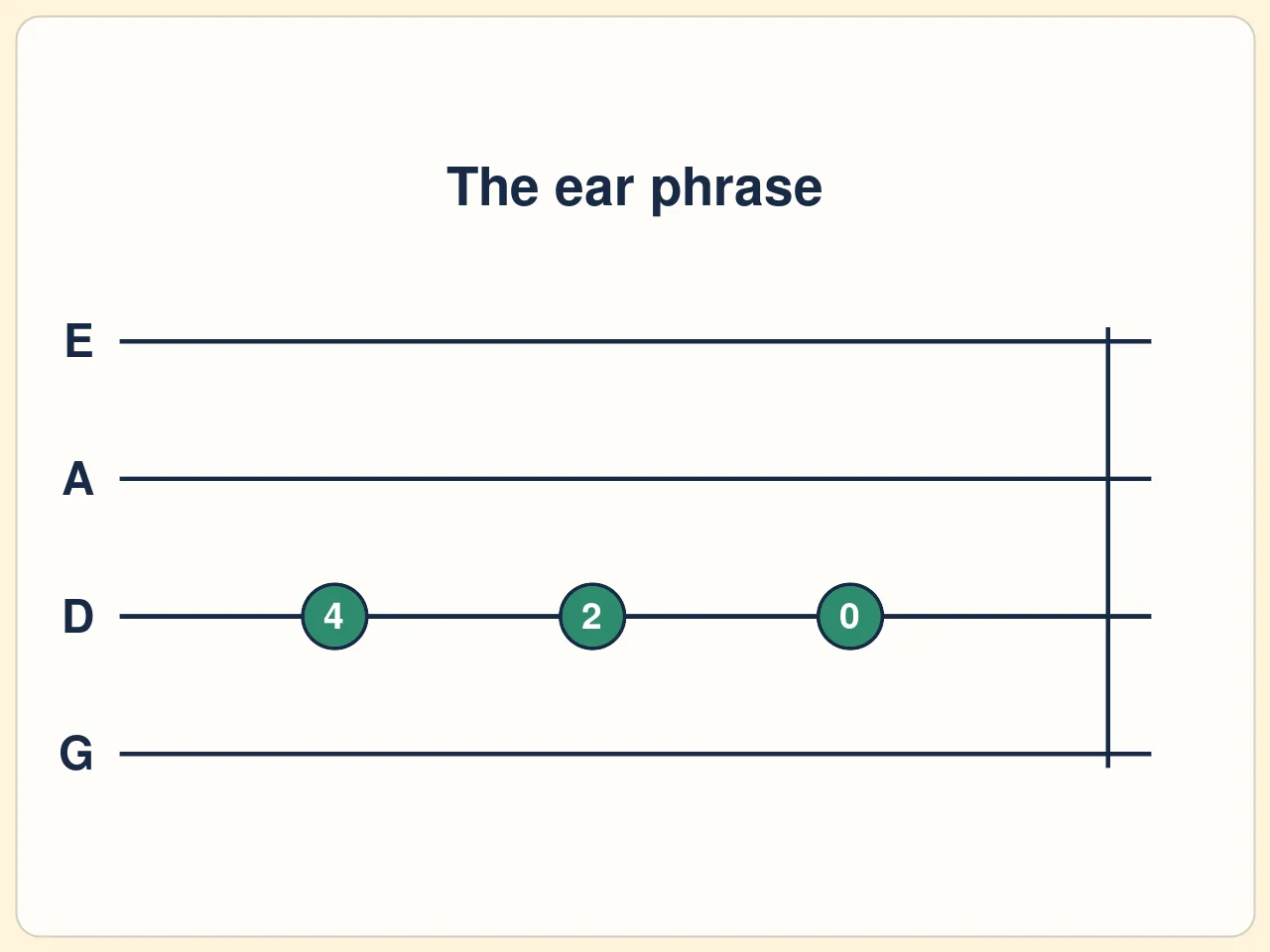
Today it is small on purpose: three notes, all on the D course, at positions you already know. No tab until you have tried.
Start with one question
For every new note ask: did it go up, go down, or stay the same? Listen to the two clips below and answer for each one before you read on.
Warm-up 1 goes up, warm-up 2 goes down.
From the sound to the fret
- Hum it first. If you can hum it, you have heard it. Your voice rises and falls with the notes.
- On one course, a higher note means a higher fret, toward the body of the mandolin.
- A lower note means a lower fret, toward the nut, or the open course.
- The same note means the same fret again.
- A wrong note is information, not a failure: if it is too high, go down a fret; too low, go up.
In the app: a practice. Get the app
In the app: a self-check exercise. Get the app
Quick check
1 more question in the app Get the app