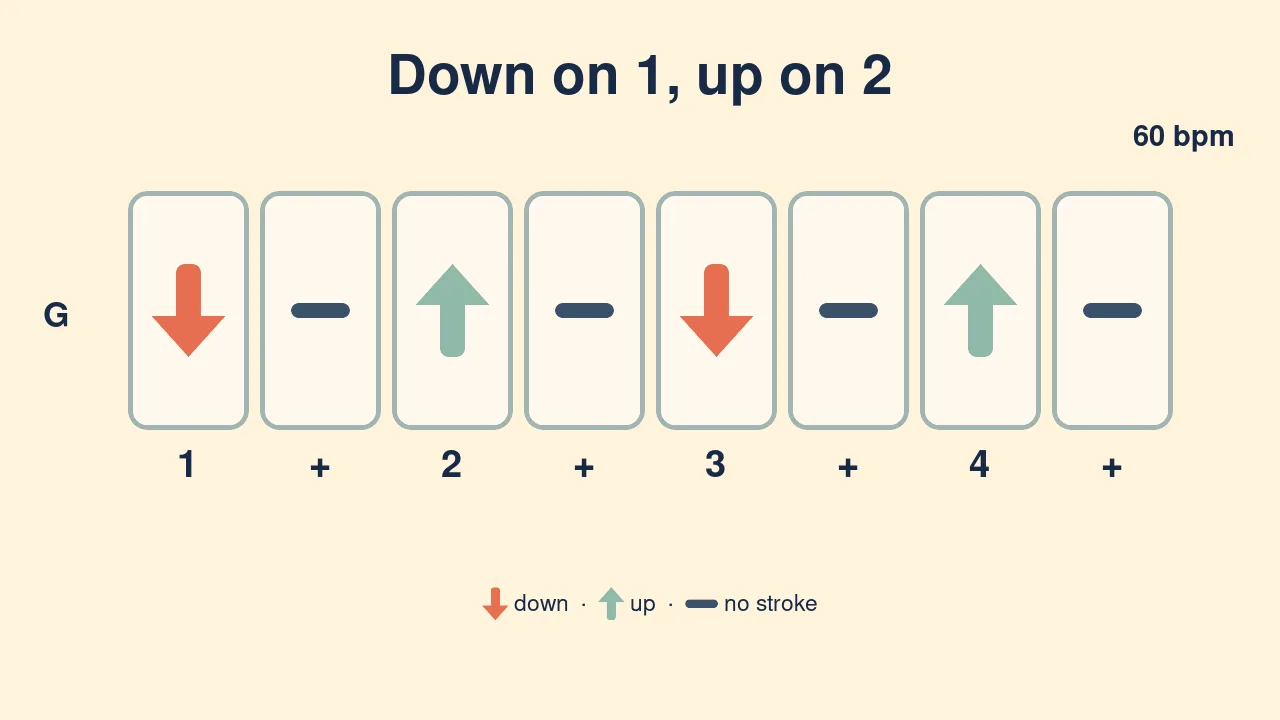
A hand that keeps moving
In Build Your Strumming Motion each downstroke stopped below the strings. Now the hand does not stop: after a downstroke it simply comes back up, and on the way up the pick brushes the strings again. You already know that upstroke from Play Down and Upstrokes.
- Think of a pendulum: down, up, down, up, with no pause at either end.
- The upstroke is the hand returning, not a new effort. It is usually a little lighter, and it may only catch the top pairs. That is fine.
- Keep the wrist as loose as in the last lesson. The beat comes from the steady swing, not from force.
First, without the strings
Hold the pick and swing your hand just above the strings, not touching them, while you count "1, 2, 3, 4" with the click: down on 1, up on 2, down on 3, up on 4.
In this video, watch the picking hand between the strokes: it keeps swinging down and up without pausing.
 Play the video
The video plays from YouTube and belongs to its author.
In the app: a practice. Get the app
Keep the hand moving on every beat
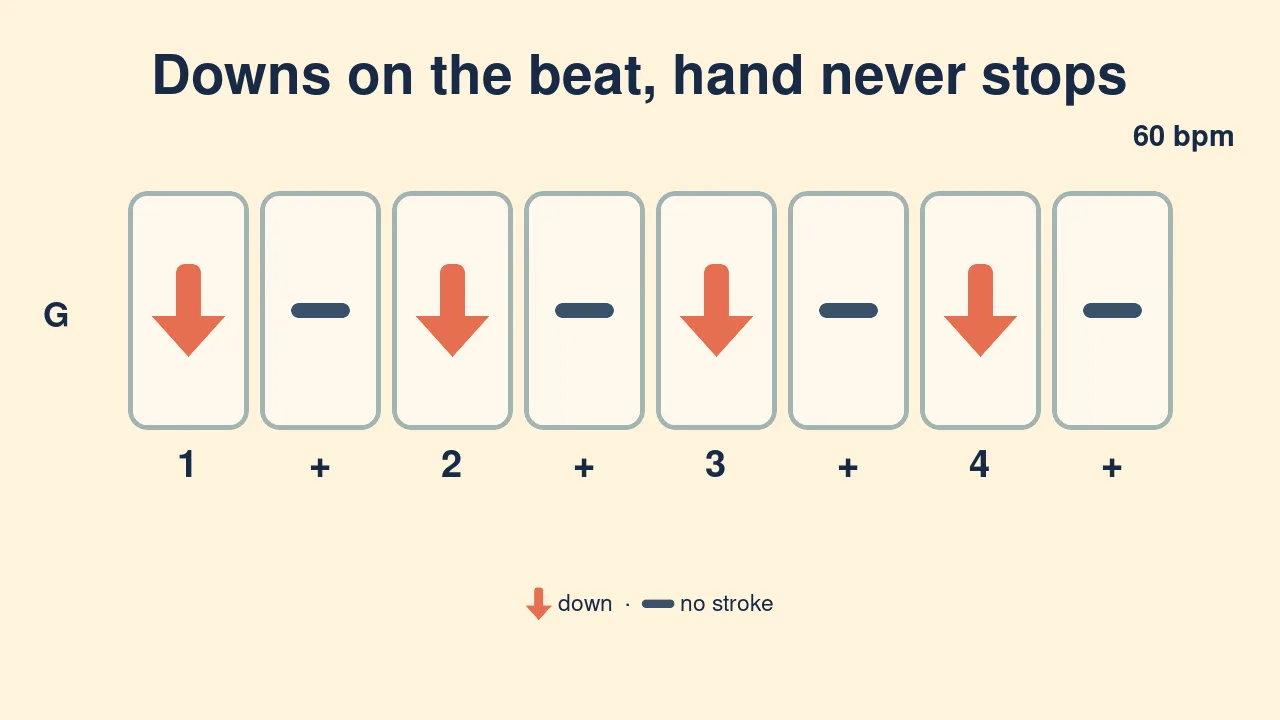
Now strum down on every beat. To get back up in time for the next down, the hand has to come up between the beats, on the "and". Let it come up without touching the strings: it is a silent move, not a stroke.
The hand now moves twice as often, down on each number and up on each "and", but you only hear the downs. This steady swing is the engine of every strum to come.
In the app: a self-check exercise. Get the app
Quick check
1 more question in the app Get the app