Four names, eight strings
Your mandolin has eight strings arranged in four pairs, called courses.
The two strings in each course are normally tuned to the same note. When playing, you usually treat the pair as one unit.
In standard tuning, the four courses are named G, D, A, E, from the lowest musical pitch to the highest.
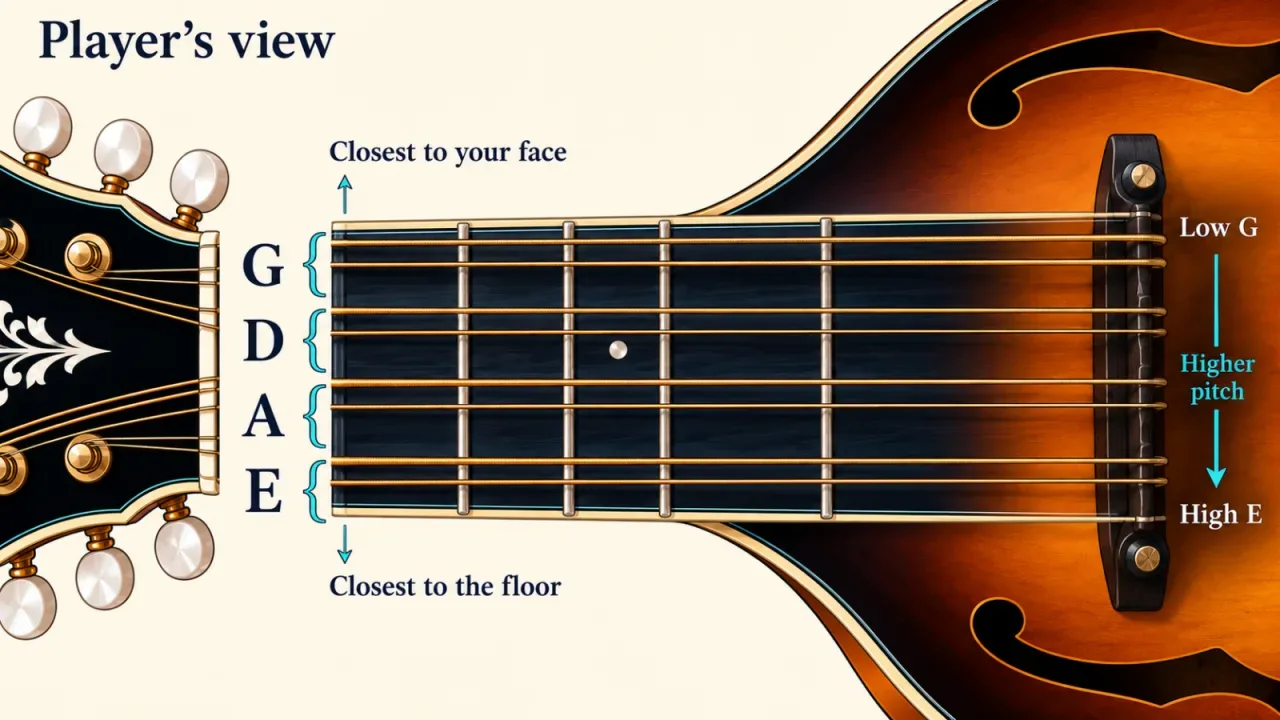
Which pair is on top?
Hold your mandolin as you learned in Hold Your Mandolin and look down at the strings.
- G: Top pair, closest to your face. The lowest pitch.
- D: Second pair from the top.
- A: Third pair from the top.
- E: Bottom pair, closest to the floor. The highest pitch.
Remember: low and high describe the sound, not where the strings sit. The lowest-sounding course, G, is physically at the top when you play.
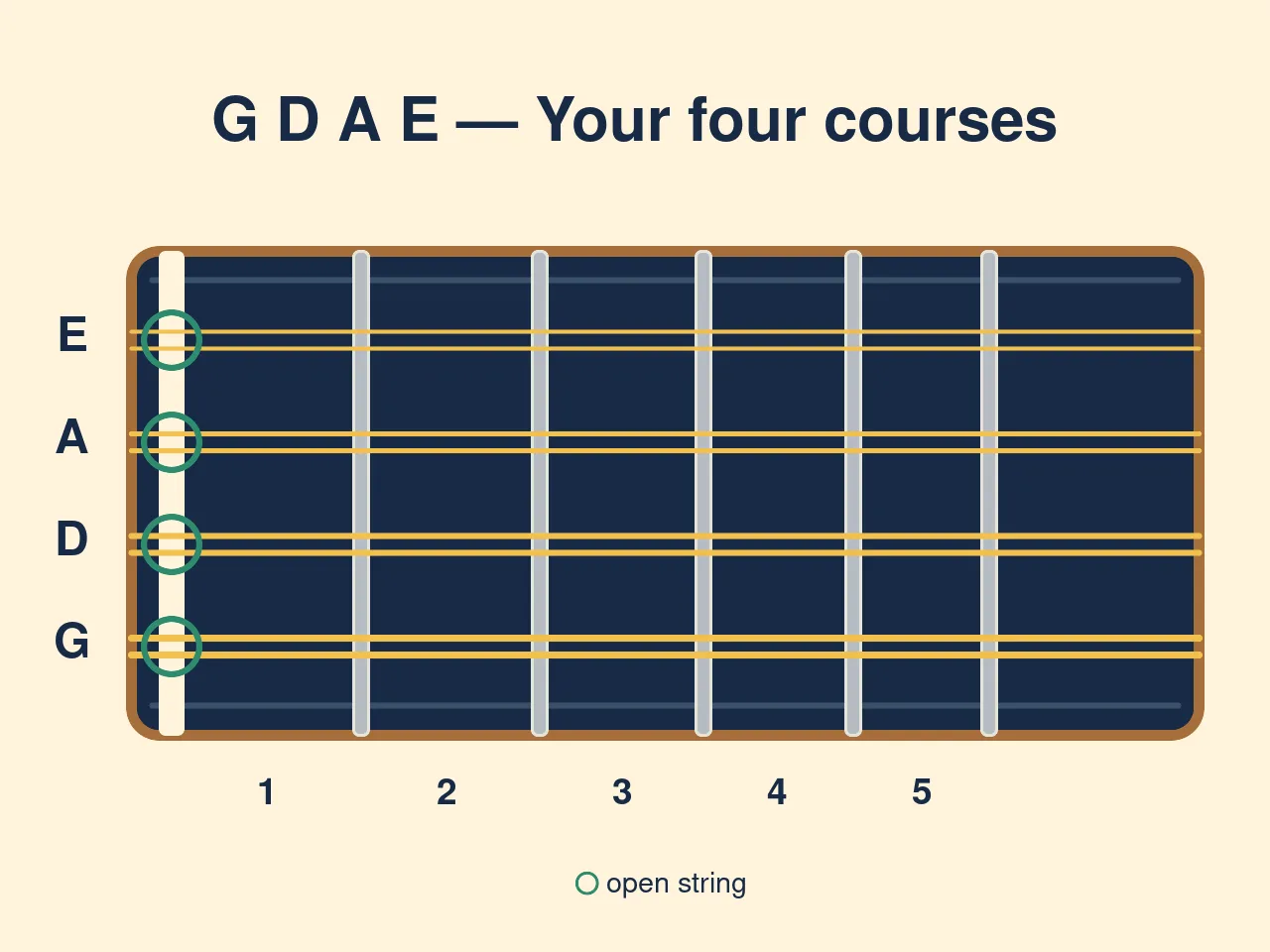
Hear the order
These four recordings let you hear how the pitch rises from G to E. Listening is optional; you only need to remember the names and positions.
Start with the deep G, then move through D and A to the bright, high E.
Say the letters aloud as you look at the corresponding pairs on your mandolin.
Quick check
1 more question in the app Get the app