Harriet Music Get the Mandolin app

Lesson 2 of 7 17 minutes

Parts of the Mandolin and What They Do

Harriet In this lesson you will identify the main parts of a mandolin and explain their basic functions.

  1. 1. Meet Your Mandolin
    1. Lesson 1: Meet the Mandolin
    2. Lesson 2: Parts of the Mandolin
    3. Lesson 3: Hold Your Mandolin
    4. Lesson 4: Choose and Hold Your Pick
    5. Lesson 5: Position Your Picking Hand
    6. Lesson 6: Learn the String Names
    7. Lesson 7: Tune Your Mandolin
  2. 2. Your First Notes
    1. Lesson 1: Play the Open Strings
    2. Lesson 2: Find the Frets
    3. Lesson 3: Fret Your First Notes
    4. Lesson 4: Get a Clean Sound
    5. Lesson 5: Use Your Fretting Fingers
    6. Lesson 6: Play Down and Upstrokes
    7. Lesson 7: Change Strings Cleanly
    8. Lesson 8: Coordinate Both Hands
    9. Lesson 9: Play Your First Melody
  3. 3. Read Tabs and Rhythm
    1. Lesson 1: Read Mandolin Tablature
    2. Lesson 2: Play Notes from Tab
    3. Lesson 3: Feel the Steady Beat
    4. Lesson 4: Count Notes and Rests
    5. Lesson 5: Practice with a Metronome
    6. Lesson 6: Read Simple Rhythmic Patterns
  4. 4. Your First Chords
    1. Lesson 1: Understand Mandolin Chords
    2. Lesson 2: Read Chord Diagrams
    3. Lesson 3: Play an Easy G Chord
    4. Lesson 4: Play an Easy C Chord
    5. Lesson 5: Switch Between G and C
    6. Lesson 6: Play an Easy D Chord
    7. Lesson 7: Strum Your First Chords
    8. Lesson 8: Change Chords in Time
    9. Lesson 9: Play a Three Chord Song
  5. 5. Strumming and Rhythm
    1. Lesson 1: Build Your Strumming Motion
    2. Lesson 2: Play Continuous Down Up Strums
    3. Lesson 3: Play Eighth Note Rhythms
    4. Lesson 4: Learn Common Strumming Patterns
    5. Lesson 5: Strum in Three Quarter Time
    6. Lesson 6: Accent the Right Beats
    7. Lesson 7: Accompany a Simple Song
  6. 6. Your First Tunes
    1. Lesson 1: Play Short Musical Phrases
    2. Lesson 2: Learn a Tune by Ear
    3. Lesson 3: Connect Musical Phrases
    4. Lesson 4: Play a Simple Folk Tune
    5. Lesson 5: Play Easy Cripple Creek
    6. Lesson 6: Practice at Different Speeds
    7. Lesson 7: Play a Complete Tune
    8. Lesson 8: Try Your First Tremolo
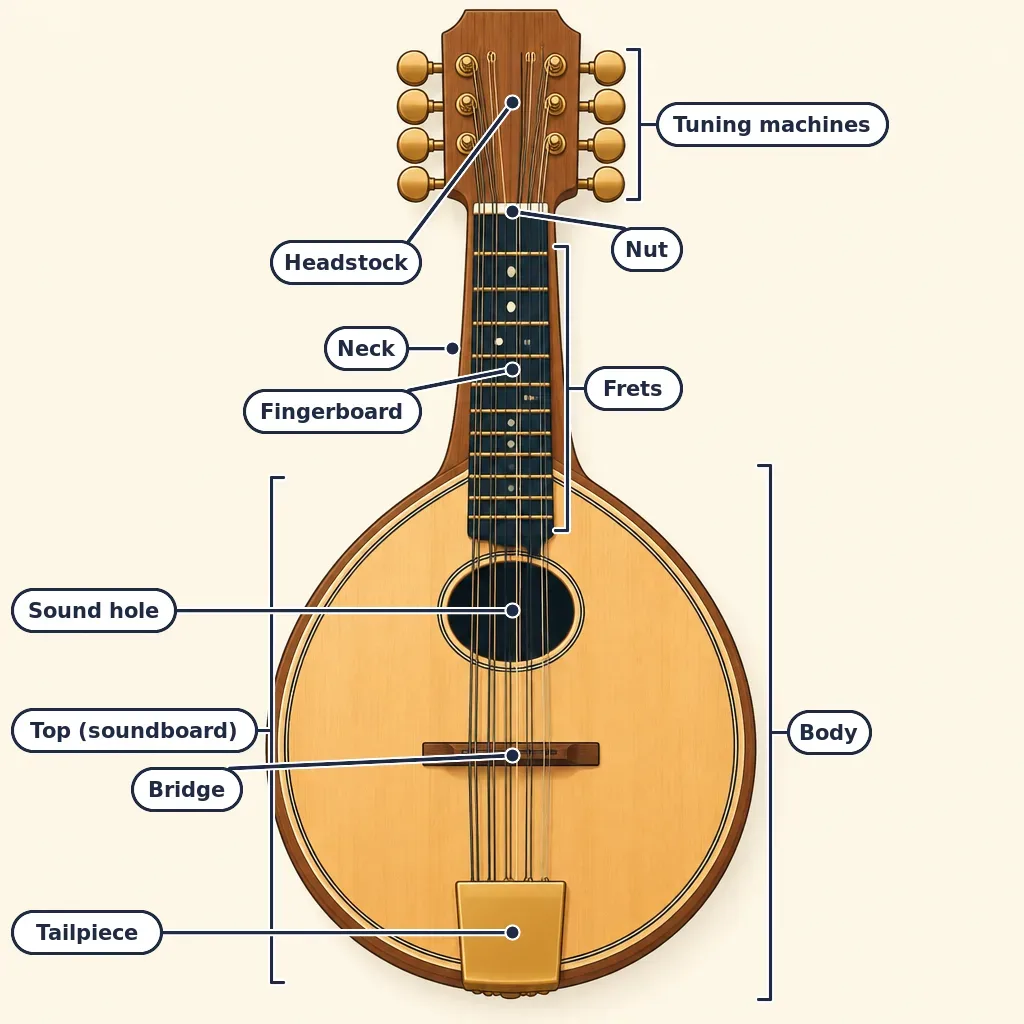
The main parts of a mandolin, from the headstock down to the tailpiece.

Two ends hold the strings

  • Headstock: the top end of the instrument.
  • Tuning machines: the geared tuners on the headstock. Each one holds a string and tightens or loosens it, which raises or lowers its pitch.
  • Nut: the small grooved piece where the neck meets the headstock. It supports the strings and marks one end of the part that sounds.
  • Bridge: stands on the top of the body. The strings pass over it, and it marks the other end of the sounding part.
  • Tailpiece: at the bottom end of the body. It holds the far ends of the strings.

The sounding part

  • The strings ring between the nut and the bridge. That stretch is the part you play.
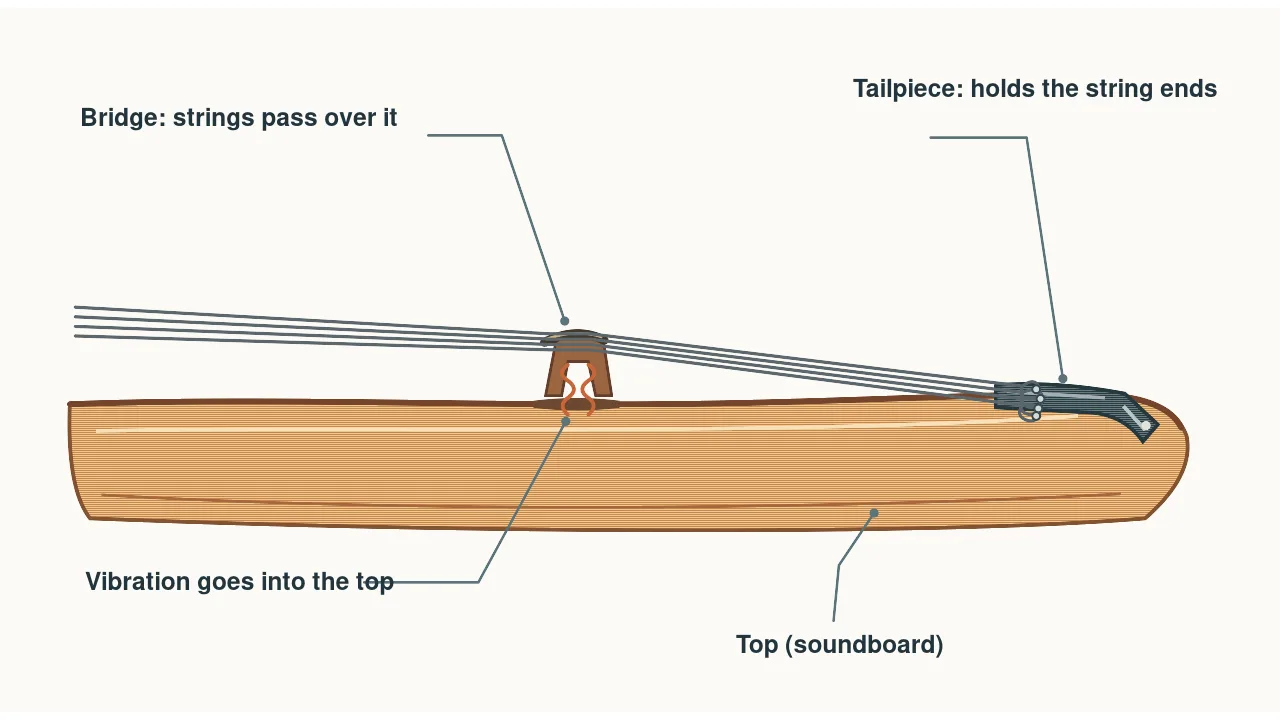
The strings pass over the bridge and are held by the tailpiece. Two different jobs.

Bridge or tailpiece?

  • The bridge carries the strings' vibration into the top, so the whole body can sound.
  • The tailpiece only anchors the strings. It does not shape the note you hear.
  • Both sit on the body, which is why beginners often mix them up. The bridge is the one the strings rest on.
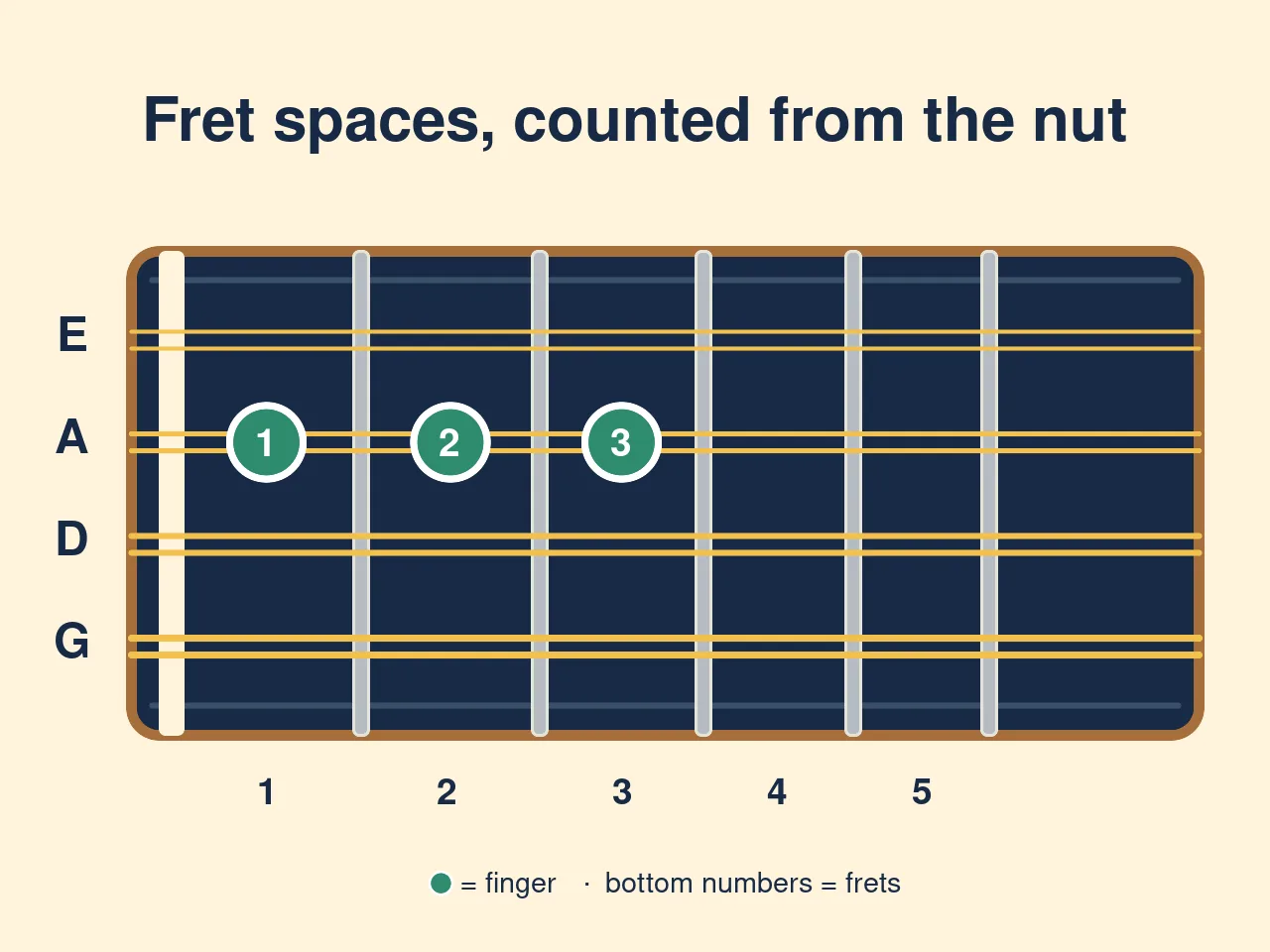
The metal frets and the numbered spaces between them, counted from the nut.

Neck, fingerboard and frets

  • The neck is the long part your fretting hand holds. Its flat front is the fingerboard.
  • Frets are the thin metal bars across the fingerboard.
  • Your finger presses the string down in the space between two frets. The string then touches the metal fret, which sets the note.
  • The spaces are named from the nut: first fret, second fret, and so on. Exactly where to press comes in Your First Notes.

Body, top and sound holes

  • The body is the hollow wooden box. Its top, or soundboard, vibrates and makes the sound you hear.
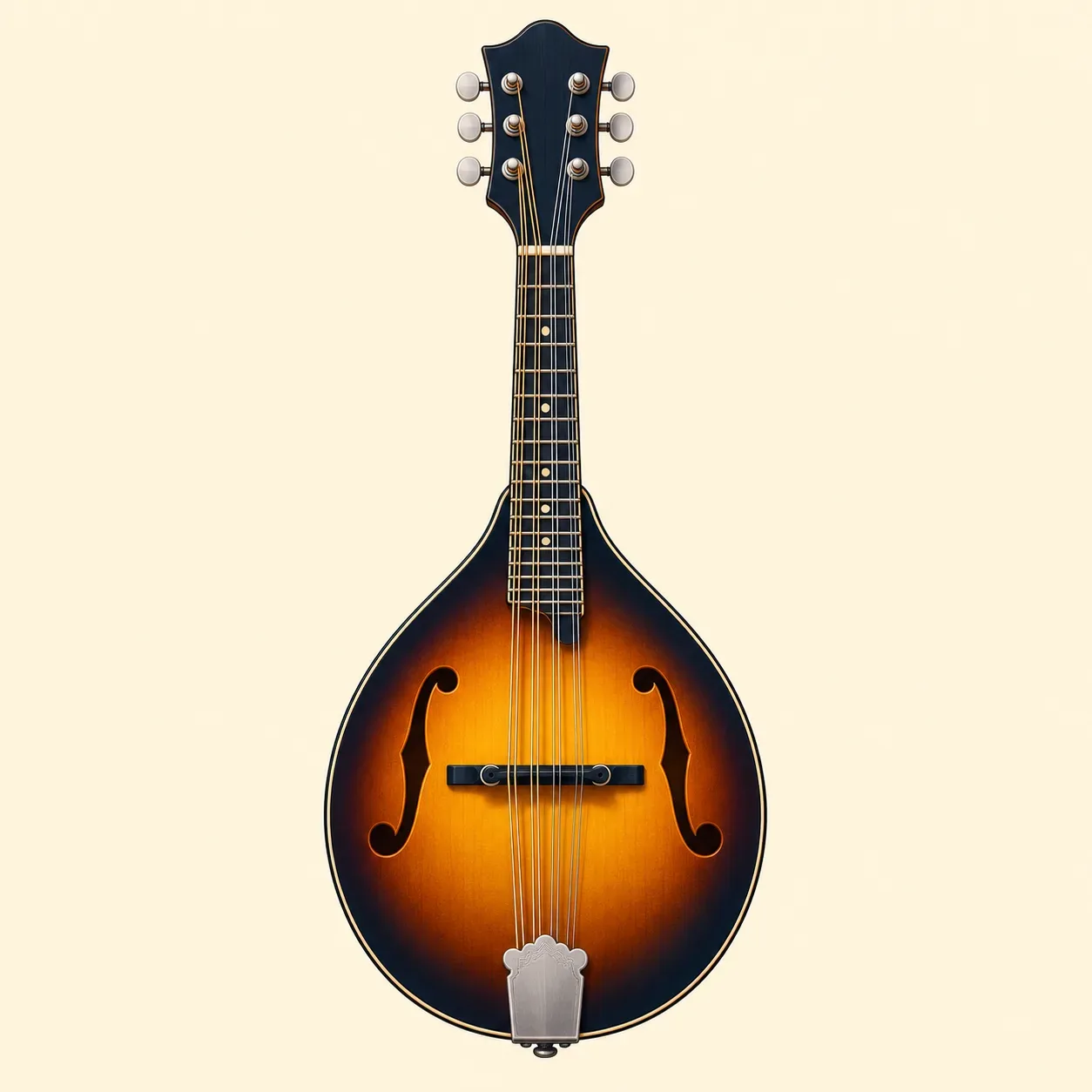
  • The sound comes out through the sound holes. A mandolin has either one oval hole or two f-holes, never both.

Two kinds of sound holes
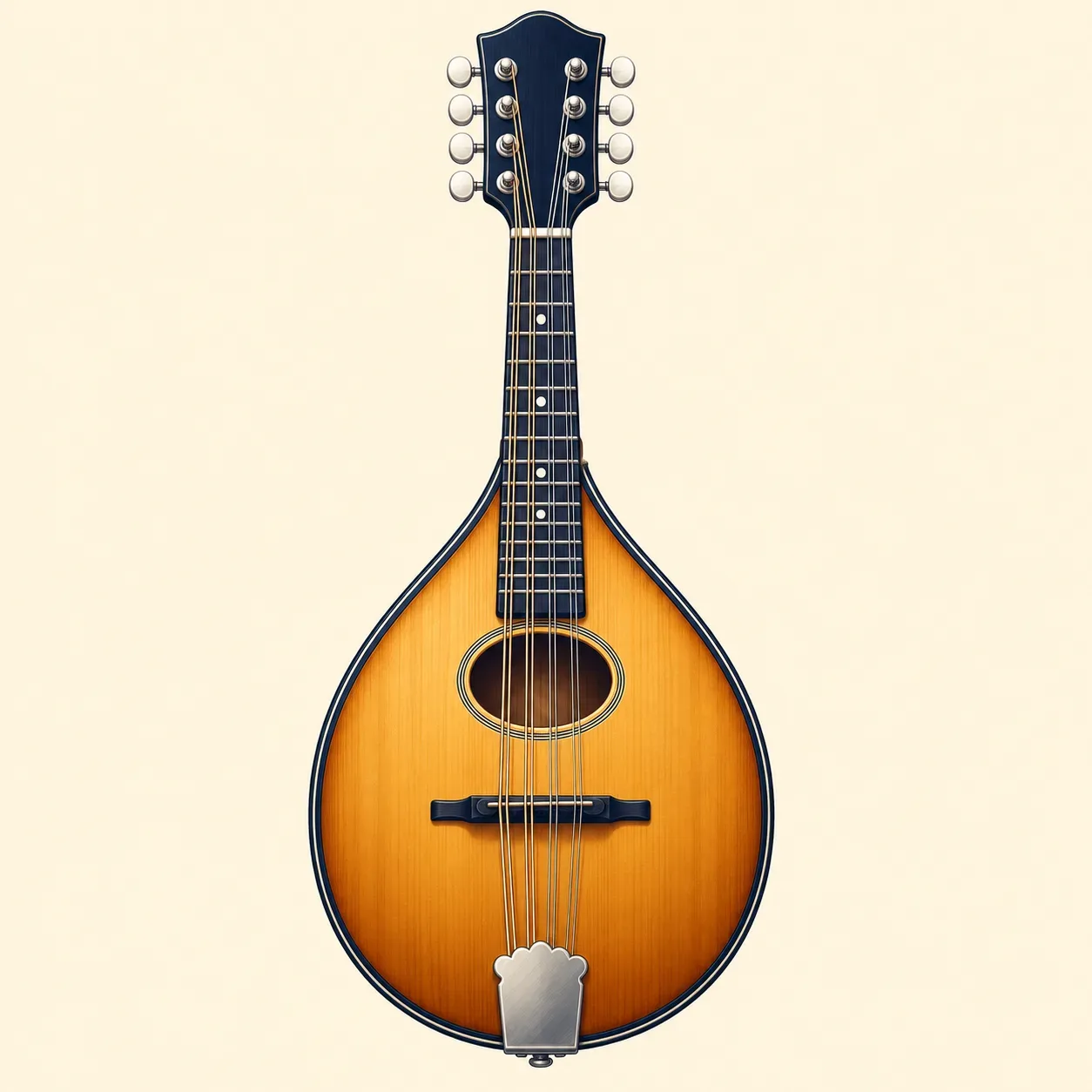
One oval sound hole in the middle of the top.
Two f-holes, one on each side of the strings.

In the video

  • In this video, MandoLessons walks along a real mandolin from the headstock to the tailpiece.
  • Watch for the tuning machines, the nut, the fretboard and frets, the top, the bridge, the tailpiece and the sound holes.
  • He also points out extras such as inlay, binding, the truss rod, a pick guard and accessories. You do not need these yet.
Play the video

The video plays from YouTube and belongs to its author.

Quick check

Between which two parts does the sounding part of a string vibrate?
Show the answer

The nut and the bridge. The strings ring between the nut and the bridge; that is the part you play.

2 more questions in the app Get the app

Practise in the free Mandolin app