Same beat, split in two
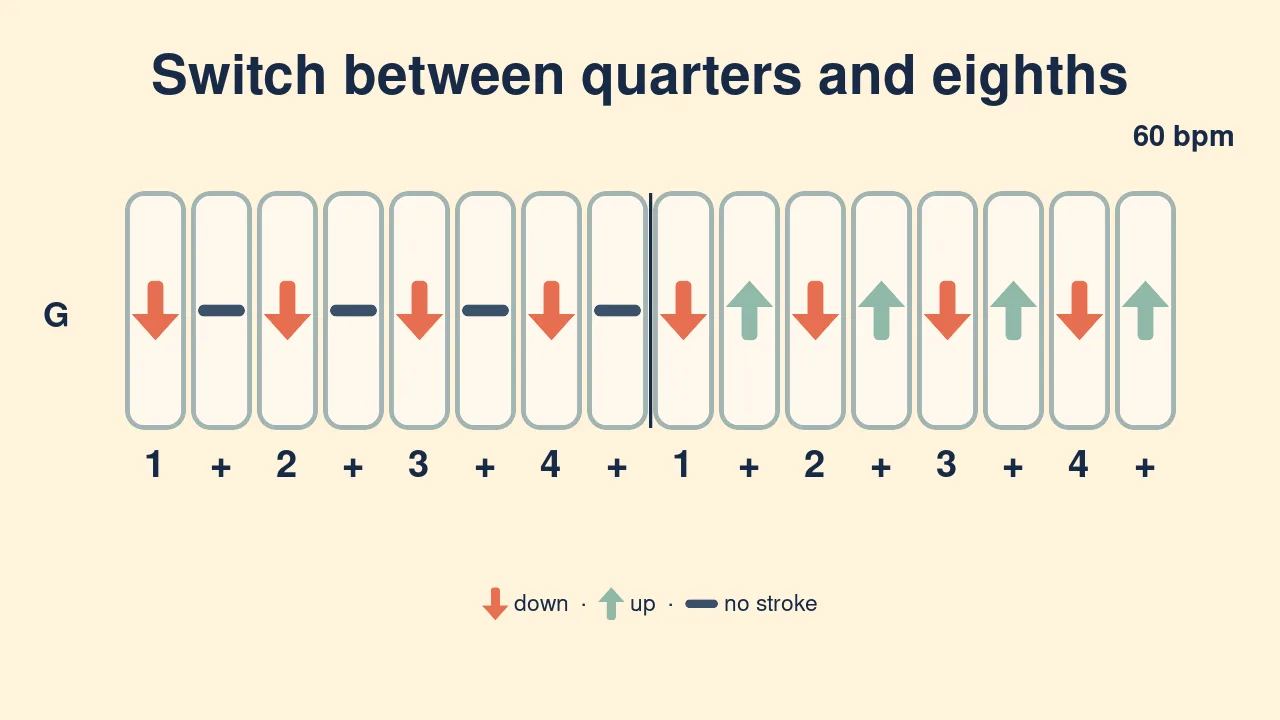
In Count Notes and Rests you counted quarter notes and eighth notes. Now you strum them.
- Quarter notes: one strum per beat, counted "1, 2, 3, 4".
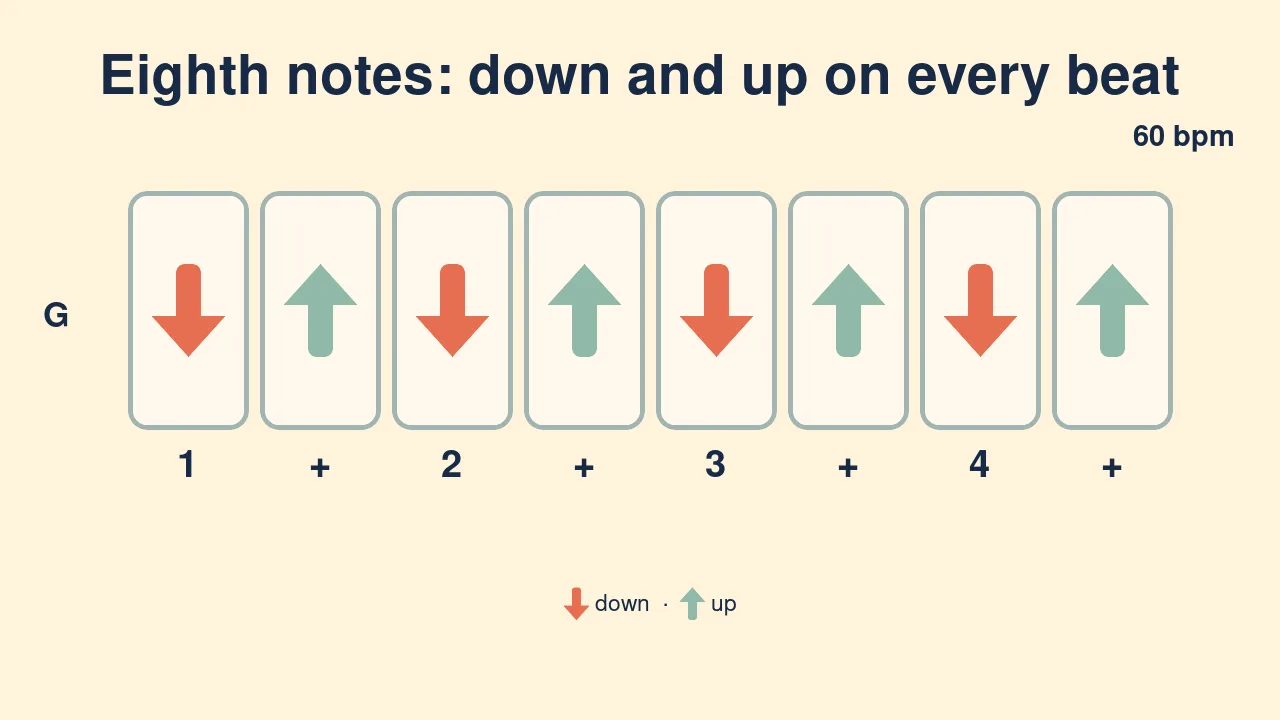
- Eighth notes: two strums per beat, counted "1 and 2 and 3 and 4 and".
- The beat does not change. The click stays where it was; the eighth notes only divide each beat into two equal halves.
On the mandolin the rule is simple: the down strum falls on the number, the up strum on the "and". It is the swing from Play Continuous Down Up Strums, with the pick now touching the strings on the way up too.
A faster hand is not a faster song
With eighth notes you hear twice as many strokes, so it can feel as if the music sped up. It did not: the click, and the downs on 1, 2, 3 and 4, stay exactly where they were. Only the space between strokes halves.
Count out loud while you strum. Your voice keeps the "and" exactly halfway between the numbers, and your hand follows it.
In the app: a self-check exercise. Get the app
Where the up strokes go
Mando Mike strums one down stroke on every beat, then adds an up stroke in the gap after a strum, the same "and" you count in this lesson. He calls his down strokes "bass and strum": the low G course first, then the whole chord. He adds the up only now and then; here you play it on every "and". As you watch, look at how his hand keeps swinging between the strums.
 Play the video
The video plays from YouTube and belongs to its author.
Quick check
1 more question in the app Get the app