Harriet Music Get the Djembe app

Lesson 4 of 6 10 minutes

Djembe and Dunun: How to Feel the Dunun Pulse

Harriet In this lesson you will follow the underlying pulse of the dunun while playing a complementary djembe pattern.

  1. 1. Meet Your Djembe
    1. Lesson 1: Meet the Djembe
    2. Lesson 2: Position Your Djembe
    3. Lesson 3: Find Your Playing Posture
    4. Lesson 4: Play Your First Bass
    5. Lesson 5: Find the Open Tone
    6. Lesson 6: Hear Bass and Tone
    7. Lesson 7: Keep a Steady Pulse
  2. 2. Your First Rhythms
    1. Lesson 1: Alternate Your Hands
    2. Lesson 2: Combine Bass and Tone
    3. Lesson 3: Learn the Slap Stroke
    4. Lesson 4: Recognize the Three Strokes
    5. Lesson 5: Read a Rhythm Grid
    6. Lesson 6: Count Beats and Offbeats
    7. Lesson 7: Play Eighth Note Patterns
    8. Lesson 8: Build Your First Phrase
    9. Lesson 9: Repeat Rhythms by Ear
    10. Lesson 10: Shape Your Accents
  3. 3. Play Your First Kuku
    1. Lesson 1: Discover the Kuku Rhythm
    2. Lesson 2: Learn Kuku Accompaniment One
    3. Lesson 3: Keep Your Kuku Pattern
    4. Lesson 4: Learn Kuku Accompaniment Two
    5. Lesson 5: Switch Between Kuku Parts
    6. Lesson 6: Recognize the Kuku Call
    7. Lesson 7: Play Along With Kuku
  4. 4. Playing Together
    1. Lesson 1: Listen and Respond
    2. Lesson 2: Practice Call and Response
    3. Lesson 3: Follow Another Djembe Part
    4. Lesson 4: Feel the Dunun Pulse
    5. Lesson 5: Play Without the Click
    6. Lesson 6: Keep Your Place
  5. 5. Traditional Rhythms
    1. Lesson 1: Discover the Djolé Rhythm
    2. Lesson 2: Learn Djolé Accompaniment
    3. Lesson 3: Follow the Djolé Call
    4. Lesson 4: Play Djolé With Others
    5. Lesson 5: Discover the Sinte Rhythm
    6. Lesson 6: Learn Sinte Accompaniment
    7. Lesson 7: Follow the Sinte Call
    8. Lesson 8: Play Sinte With Others
    9. Lesson 9: Discover the Fanga Rhythm
    10. Lesson 10: Learn Fanga Accompaniment
    11. Lesson 11: Follow the Fanga Call
    12. Lesson 12: Play Fanga With Others
    13. Lesson 13: Recognize Traditional Rhythms
  6. 6. Discover Twelve Eight Rhythms
    1. Lesson 1: Feel Three Subdivisions
    2. Lesson 2: Count in Twelve Eight
    3. Lesson 3: Play Your First Ternary Patterns
    4. Lesson 4: Discover the Soli Rhythm
    5. Lesson 5: Learn Soli Accompaniment
    6. Lesson 6: Follow the Soli Call
    7. Lesson 7: Play Soli With Others
    8. Lesson 8: Feel the Ternary Groove
  7. 7. Breaks Variations and Performance
    1. Lesson 1: Understand Musical Calls
    2. Lesson 2: Play a Simple Break
    3. Lesson 3: Return After a Break
    4. Lesson 4: Create Small Rhythmic Variations
    5. Lesson 5: Control Your Playing Tempo
    6. Lesson 6: Start and Finish Together
    7. Lesson 7: Plan an Ensemble Arrangement
    8. Lesson 8: Lead a Simple Call
    9. Lesson 9: Improvise a Short Solo
    10. Lesson 10: Perform a Complete Rhythm

The deepest sound is not always the beat

A low drum can help you feel where the music is going, but its pattern may include spaces and notes between the main beats. Following it means finding the shared pulse—not tapping every time you hear a low sound.
You have already kept a Kuku part beside another djembe in Follow Another Djembe Part. Now listen to a different instrument: the dunun, a cylindrical drum played with a stick, often alongside a bell.
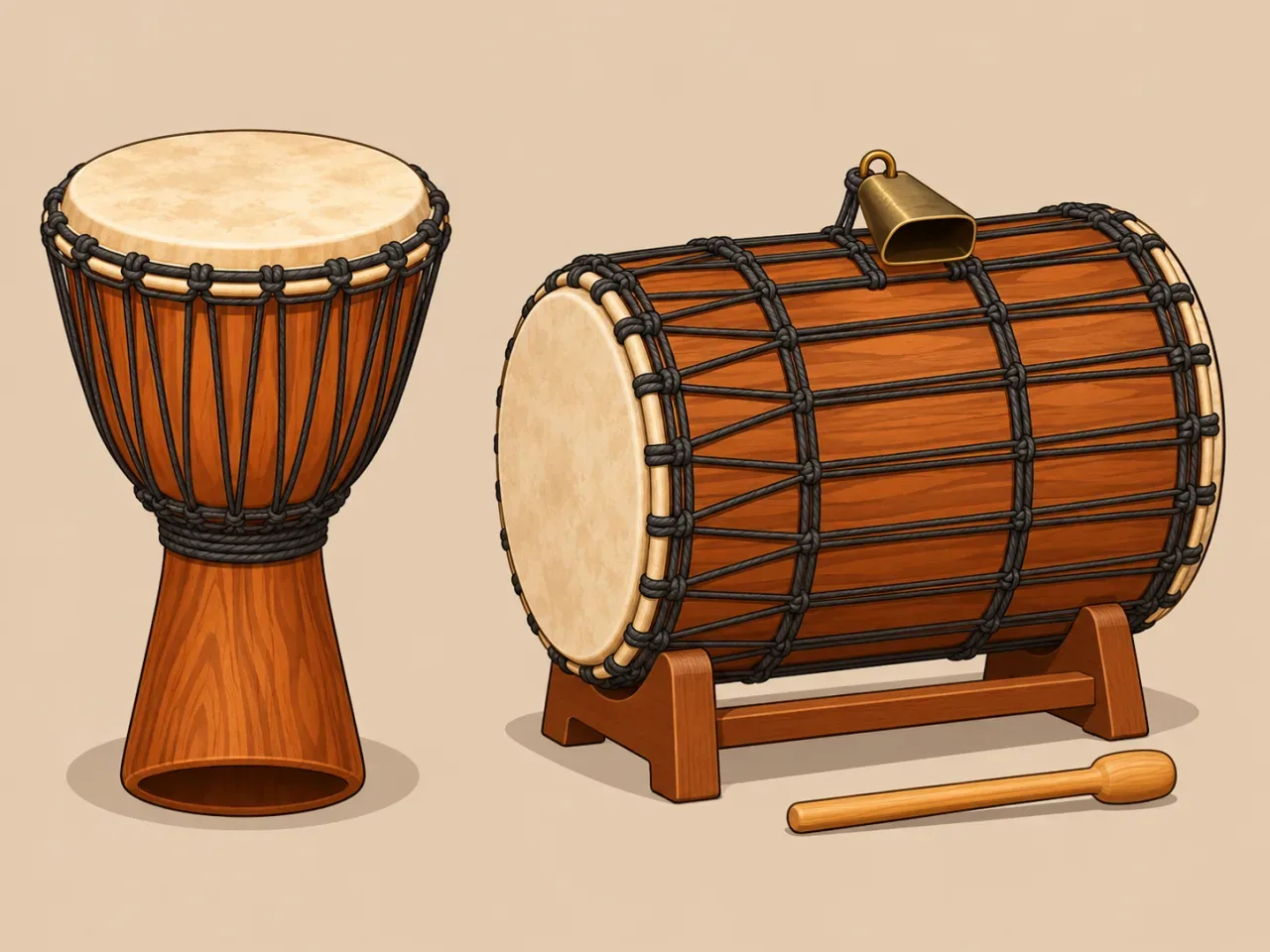
Left: the goblet-shaped djembe, with one playing head. Right: a horizontal, two-headed dunun with a bell above it. These are different instruments with different voices.

Find the pulse before adding your part

A bell pattern and a drum pattern can mark different places within the same cycle. Use the spoken count to establish evenly spaced main beats, then keep those beats going when the drum is silent or strikes between them.
To hear that distinction, we have chosen Howcast’s How to Play the Dundun Kuku Rhythm, taught by Michael Markus. Listen to his first basic demonstration and spoken count: he places the bell on 1 and the drum after it. This is another Kuku interpretation, not a recording of our written RhythmConnect arrangement. Focus on listening; you do not need to learn the stick technique or later variations.

Play the video

The video plays from YouTube and belongs to its author.

Let the count continue through the spaces

Replay the first basic example. Say the main counts evenly and tap them lightly on your leg. Your taps should not follow every dunun attack: an attack between two counts does not create a new beat.
When the video moves to a faster example or a variation, stop and return to the basic one. Keep one stable passage as your reference. If the pulse becomes unclear, listen to the spoken count again before adding any djembe notes.
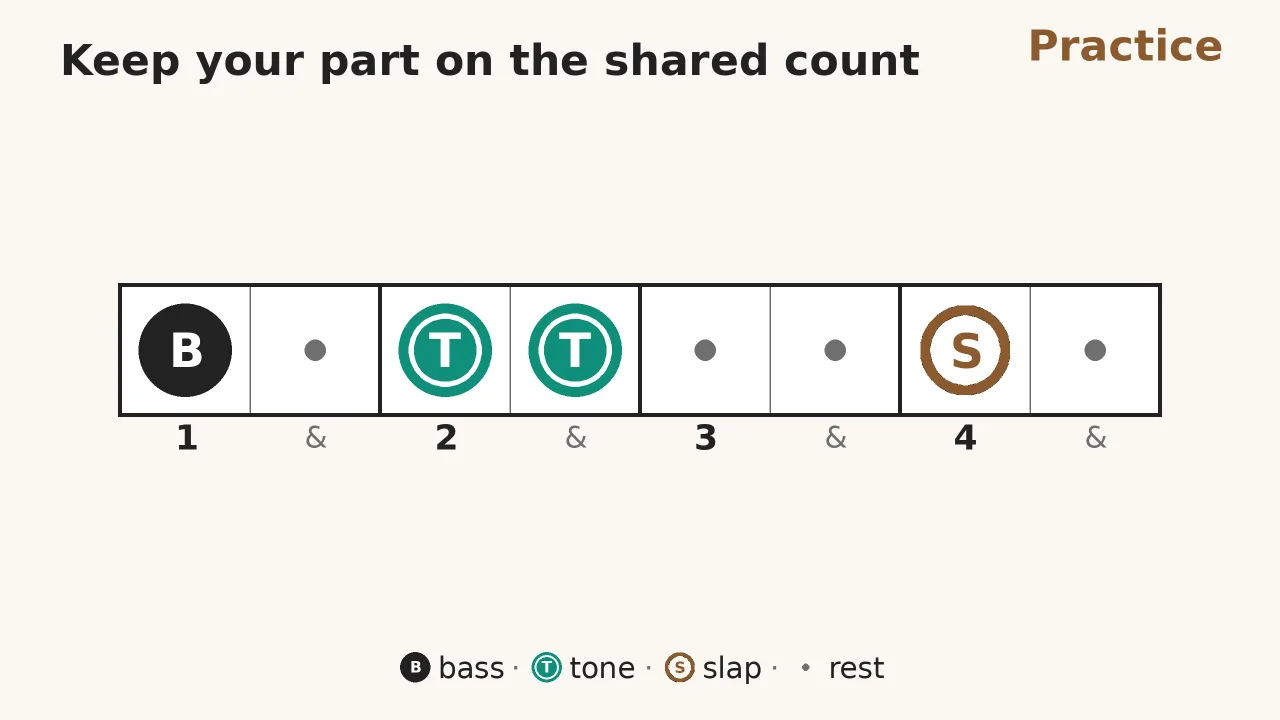
Your familiar first unit against four even practice beats. The numbers are the main pulse; & marks halfway between. This is your djembe reference, not a transcription of the dunun part.

Add the familiar djembe voice

First hear a full cycle without playing. When you can follow the basic example’s steady count, begin your familiar B–TT––S– unit on the next 1. Keep its tone pair, silent beat 3 and final space unchanged.
This is a listening exercise combining your course unit with Markus’s dunun example. It does not claim to reproduce his full ensemble arrangement. Let the low drum remain audible; playing louder to cover it removes the very reference you are learning to follow.

Quick check

A dunun strike falls between two evenly spaced main counts. What should your pulse tap do?
Show the answer

Keep the same evenly spaced counts.. A rhythmic attack can fall between main beats without changing the pulse.

1 more question in the app Get the app

Practise in the free Djembe app