The djembe’s deep voice
A bass stroke gives the djembe its low, full sound. The key is not to hit as hard as possible, but to make a relaxed contact near the center and leave the skin free to vibrate. Even a single stroke gives you something useful to listen for: the sound continuing after your hand has left.
Jacob’s short lesson for African Drumming Online offers a starting point for this movement. As you explore it, the contact area and the hand’s release are the two details to keep in mind.
 Play the video
The video plays from YouTube and belongs to its author.
Aim for a low, open sound
Use the stable drum position and relaxed shoulders from Find Your Playing Posture. You need a djembe for the physical practice; without one, listen and study the contact area first.
The bass is the deep, resonant sound played near the center of the head. Bring a relaxed, open hand down with a natural arm movement. Let the palm meet the skin, then let the hand come away: contact, release, listen. Do not drive the hand into the drum or hold it down.
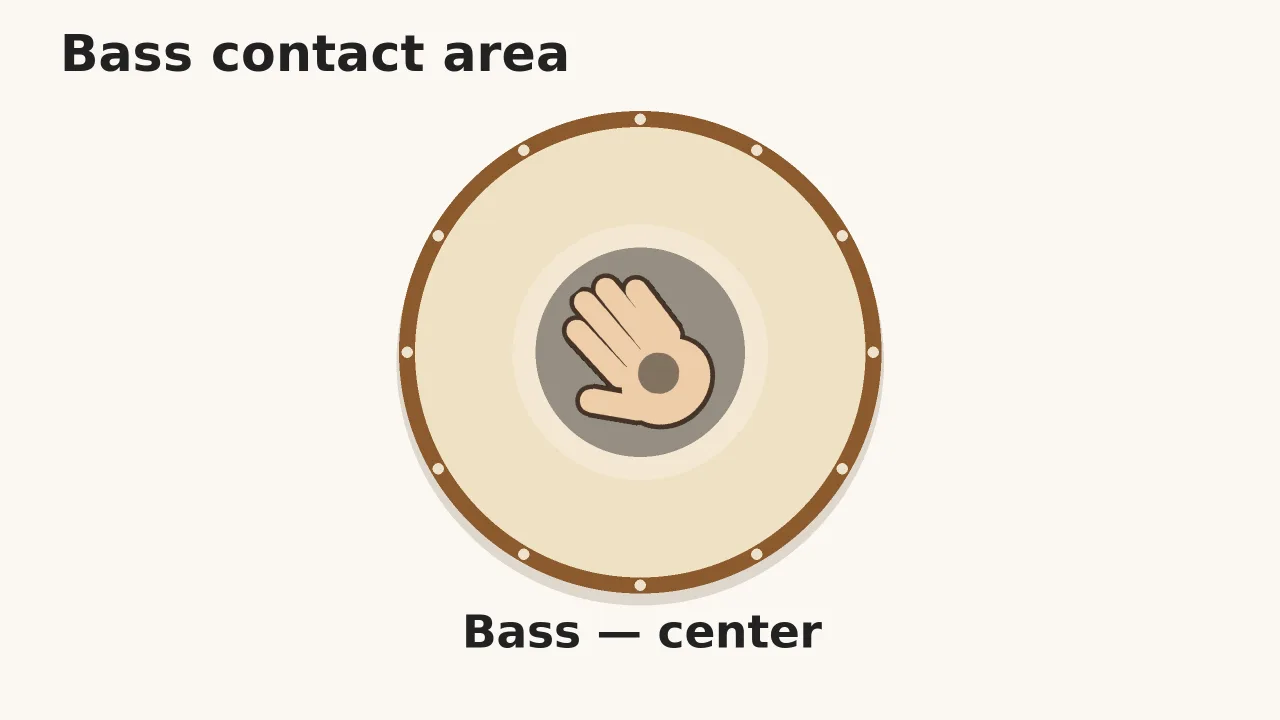
- Bass
- Rest
- Bass
- Rest
- Bass
- Rest
- Bass
- Rest
Release or damp?
Play one gentle bass and let your hand rebound. Listen until the sound fades. Now make one equally gentle contact but leave the hand resting on the head briefly. The second sound should feel more cut off: the hand is damping the vibrating skin. Finish with another released stroke.
A useful bass is full and low, rather than thin or muffled. If yours sounds closed, first check that the hand releases and the drum’s base is clear. If it sounds thin, check that your palm is contacting near the center. Change one thing at a time; hitting harder is not the first fix.
Quick check
1 more question in the app Get the app
