Harriet Music Get the Djembe app

Lesson 3 of 7 7 minutes

Djembe Playing Posture: How to Sit and Hold Your Arms

Harriet In this lesson you will sit comfortably with relaxed shoulders, arms and wrists for safe, controlled playing.

  1. 1. Meet Your Djembe
    1. Lesson 1: Meet the Djembe
    2. Lesson 2: Position Your Djembe
    3. Lesson 3: Find Your Playing Posture
    4. Lesson 4: Play Your First Bass
    5. Lesson 5: Find the Open Tone
    6. Lesson 6: Hear Bass and Tone
    7. Lesson 7: Keep a Steady Pulse
  2. 2. Your First Rhythms
    1. Lesson 1: Alternate Your Hands
    2. Lesson 2: Combine Bass and Tone
    3. Lesson 3: Learn the Slap Stroke
    4. Lesson 4: Recognize the Three Strokes
    5. Lesson 5: Read a Rhythm Grid
    6. Lesson 6: Count Beats and Offbeats
    7. Lesson 7: Play Eighth Note Patterns
    8. Lesson 8: Build Your First Phrase
    9. Lesson 9: Repeat Rhythms by Ear
    10. Lesson 10: Shape Your Accents
  3. 3. Play Your First Kuku
    1. Lesson 1: Discover the Kuku Rhythm
    2. Lesson 2: Learn Kuku Accompaniment One
    3. Lesson 3: Keep Your Kuku Pattern
    4. Lesson 4: Learn Kuku Accompaniment Two
    5. Lesson 5: Switch Between Kuku Parts
    6. Lesson 6: Recognize the Kuku Call
    7. Lesson 7: Play Along With Kuku
  4. 4. Playing Together
    1. Lesson 1: Listen and Respond
    2. Lesson 2: Practice Call and Response
    3. Lesson 3: Follow Another Djembe Part
    4. Lesson 4: Feel the Dunun Pulse
    5. Lesson 5: Play Without the Click
    6. Lesson 6: Keep Your Place
  5. 5. Traditional Rhythms
    1. Lesson 1: Discover the Djolé Rhythm
    2. Lesson 2: Learn Djolé Accompaniment
    3. Lesson 3: Follow the Djolé Call
    4. Lesson 4: Play Djolé With Others
    5. Lesson 5: Discover the Sinte Rhythm
    6. Lesson 6: Learn Sinte Accompaniment
    7. Lesson 7: Follow the Sinte Call
    8. Lesson 8: Play Sinte With Others
    9. Lesson 9: Discover the Fanga Rhythm
    10. Lesson 10: Learn Fanga Accompaniment
    11. Lesson 11: Follow the Fanga Call
    12. Lesson 12: Play Fanga With Others
    13. Lesson 13: Recognize Traditional Rhythms
  6. 6. Discover Twelve Eight Rhythms
    1. Lesson 1: Feel Three Subdivisions
    2. Lesson 2: Count in Twelve Eight
    3. Lesson 3: Play Your First Ternary Patterns
    4. Lesson 4: Discover the Soli Rhythm
    5. Lesson 5: Learn Soli Accompaniment
    6. Lesson 6: Follow the Soli Call
    7. Lesson 7: Play Soli With Others
    8. Lesson 8: Feel the Ternary Groove
  7. 7. Breaks Variations and Performance
    1. Lesson 1: Understand Musical Calls
    2. Lesson 2: Play a Simple Break
    3. Lesson 3: Return After a Break
    4. Lesson 4: Create Small Rhythmic Variations
    5. Lesson 5: Control Your Playing Tempo
    6. Lesson 6: Start and Finish Together
    7. Lesson 7: Plan an Ensemble Arrangement
    8. Lesson 8: Lead a Simple Call
    9. Lesson 9: Improvise a Short Solo
    10. Lesson 10: Perform a Complete Rhythm

Less tension, more freedom

It is easy to lift your shoulders or squeeze the drum while concentrating on your hands. That extra effort can make even a simple movement feel awkward. A comfortable playing posture gives your arms room to move while the drum stays secure.

Support the drum, free your arms

Begin with the stable chair and drum setup from Position Your Djembe. Keep both feet supported and the drum within comfortable reach. Without a drum, try the shoulder and wrist movements now; check your reach when you have one.
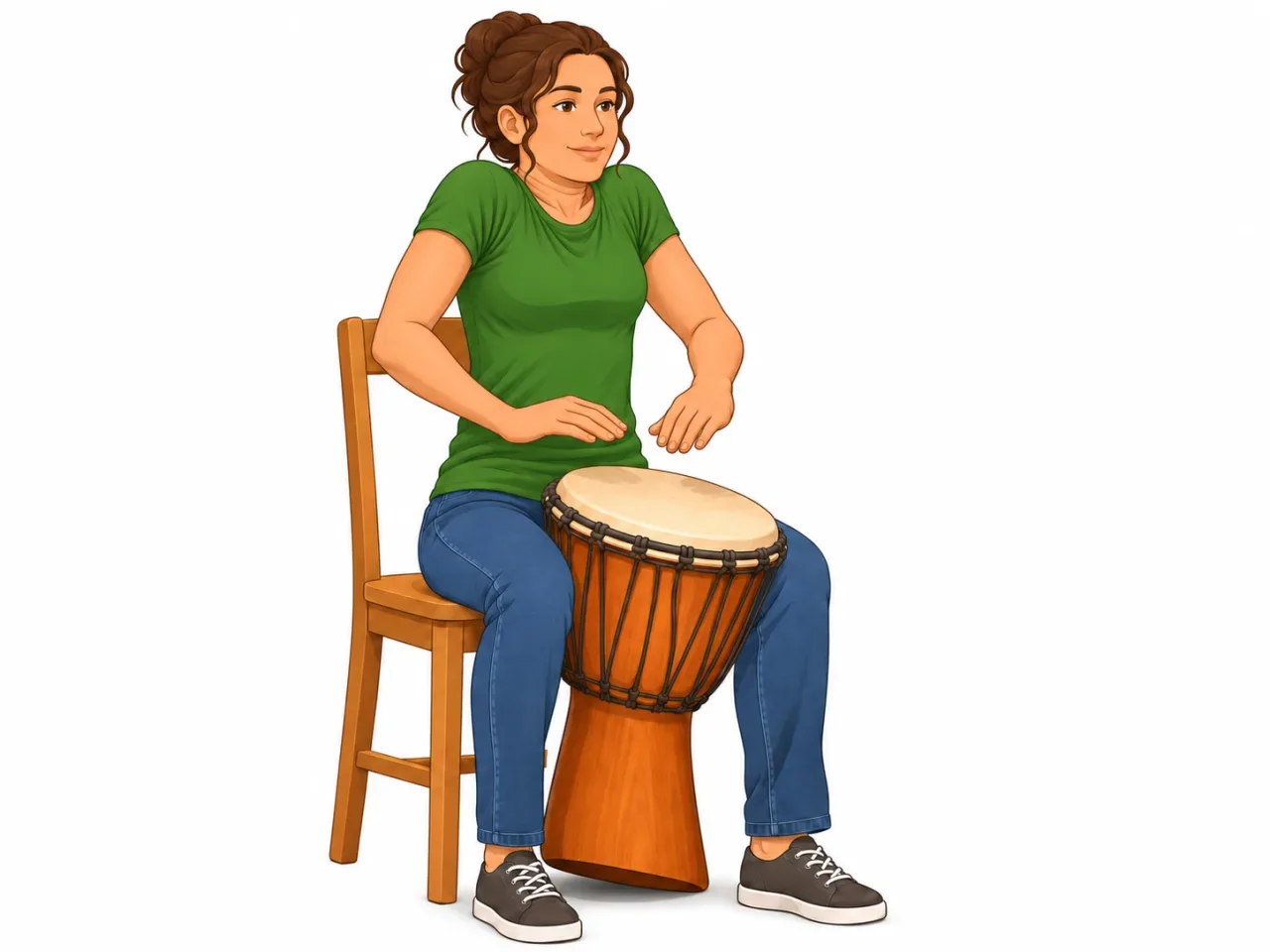
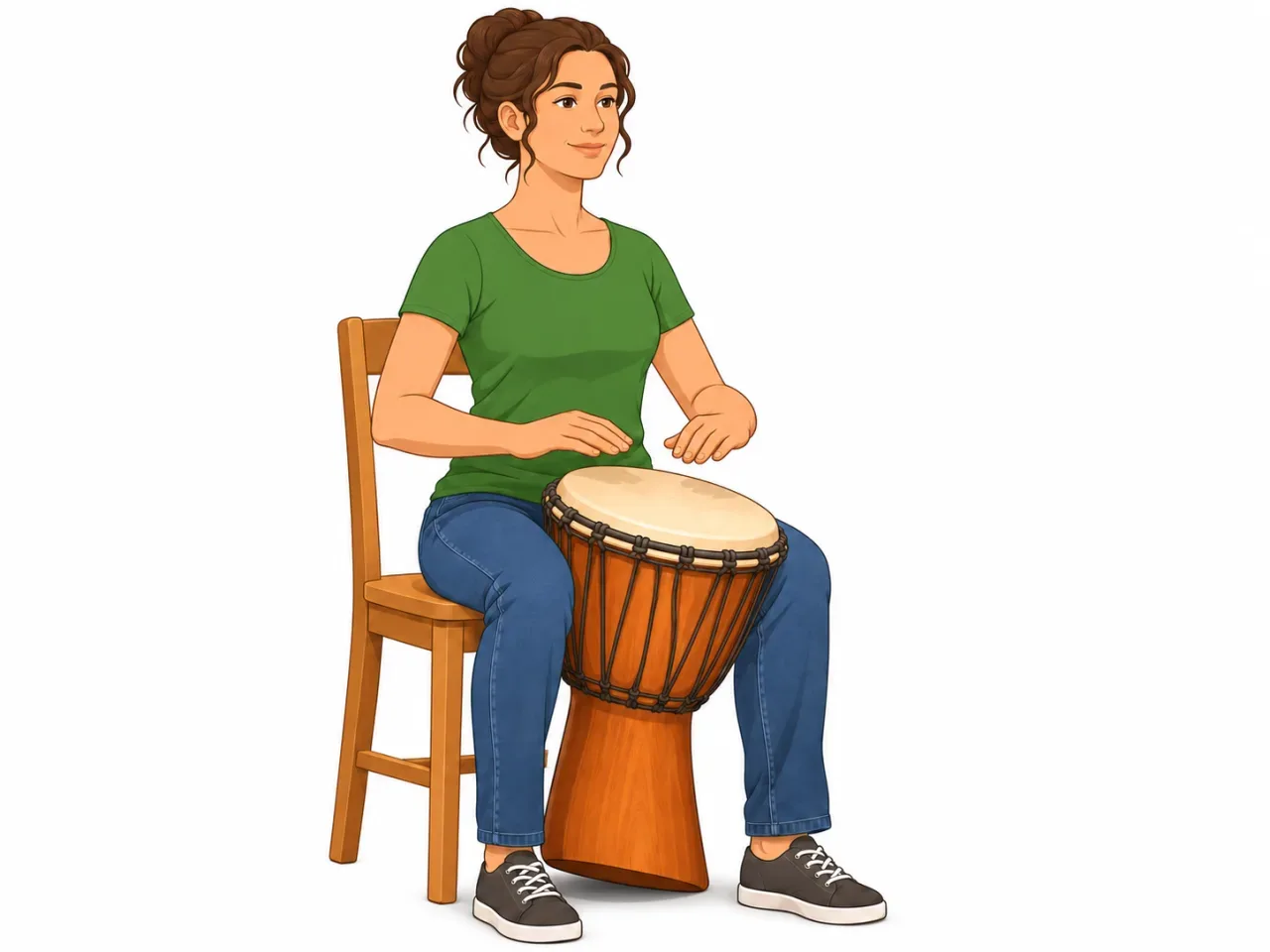
Let your back be upright and natural, rather than stiff. Your shoulders can rest down while your elbows move freely beside you. Avoid reaching by leaning far forward or lifting your shoulders. If reaching feels awkward, reset the chair and drum position first.

Notice the shoulders
Shoulders resting down; arms free to move.
Do this Shoulders resting down; arms free to move.
Shoulders lifted and held tight.
Avoid this Shoulders lifted and held tight.

Let the hands return

Relaxed does not mean collapsed: keep enough support to sit steadily, but do not lock your wrists or pin your elbows against your sides. Your knees steady the shell gently; squeezing hard adds effort without helping your hands.
Lift one hand a little, lower it to touch the head lightly, then let it come away. Do not press it into the skin or force a wrist bend. This is preparation for the rebound after a stroke, not a test of your sound. You will learn the stroke itself in Play Your First Bass.

The following Howcast demonstration puts these ideas into motion: a supported body, relaxed shoulders and arms that can move freely. It is a useful reference before trying the preparation routine yourself.

Play the video

The video plays from YouTube and belongs to its author.

Quick check

Your shoulders keep rising whenever you reach for the drumhead. What should you try first?
Show the answer

Check the chair and drum position, then try a smaller movement with shoulders down.. A comfortable reach lets the arms move without using raised shoulders to compensate.

Practise in the free Djembe app