Let your ears lead
A rhythm can stay in your memory as a little sound-shape: a low note, a brighter answer, a pause. Learning that shape before looking at a grid makes it easier to pick up a phrase from another drummer.
You already know the sounds and the even count. This time, listen for pulse, sound order and spaces. Each recording plays its phrase twice after four count-in clicks. Leave the feedback grids farther down the page until you have tried both examples.
After listening, you may say “bass” and “tone”, or use your own short syllables such as “dum” and “ta”. These are memory aids, not universal traditional names. Keep silence where the phrase is silent.
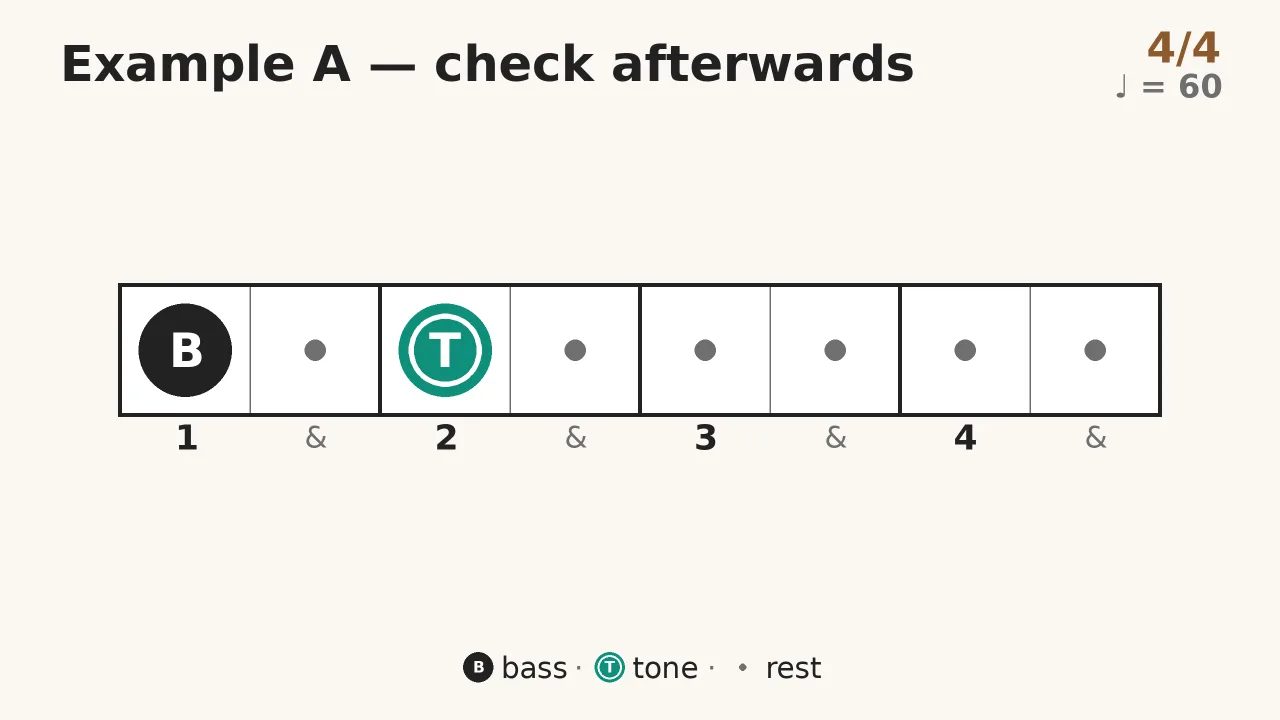
- Bass
- Rest
- Tone
- Rest
- Rest
- Rest
- Rest
- Rest
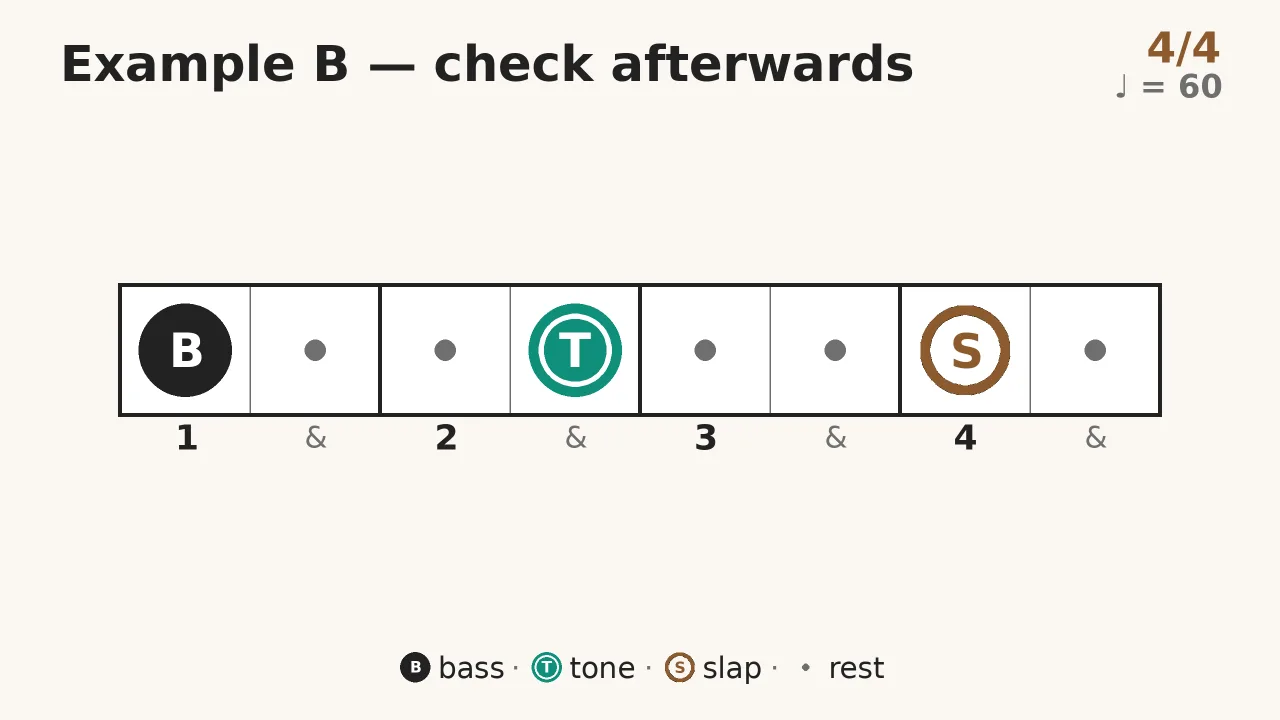
- Bass
- Rest
- Rest
- Tone
- Rest
- Rest
- Slap
- Rest
In the app: a practice. Get the app
Check after the attempt
Now compare your response with the grids. Example A plays bass on 1 and tone on 2, then leaves the remaining positions silent. Example B plays bass on 1, tone on the & after 2, and slap on 4.
Choose one difference to repair: a wrong sound, an early entry or a shortened silence. Return to the recording and try again without reading. A correct grid answer alone does not prove that your played response matched.
Prepare the short pad response
The last quiz activity uses one more short phrase at 60 BPM. Listen twice below, then say it back from memory before checking the description.
Start the round and listen during its demonstration. Respond only when the game gives you the turn, using the on-screen pads. The visual guide is available if you lose your place. The score checks pad timing and stroke choice; it does not hear your physical drum.
- Bass
- Rest
- Tone
- Rest
- Slap
- Rest
- Rest
- Rest
Check after listening: bass on 1, tone on 2, slap on 3, then a silent beat 4. Keep each & silent too. If the ending feels too short, count the complete four-beat bar aloud before starting the round.
