Keep your space in the shared sound
The second drummer’s notes can make your own rests feel crowded. Those rests still belong in your part. Playing together means hearing that extra activity while keeping your own phrase recognizable.
Use the first accompaniment from Learn Djolé Accompaniment at 50 BPM. The two voices below are the same ones heard there. Our entrance exercise also keeps the adapted cue from Follow the Djolé Call; it is a course practice arrangement, not a claim that both sources use an identical call.
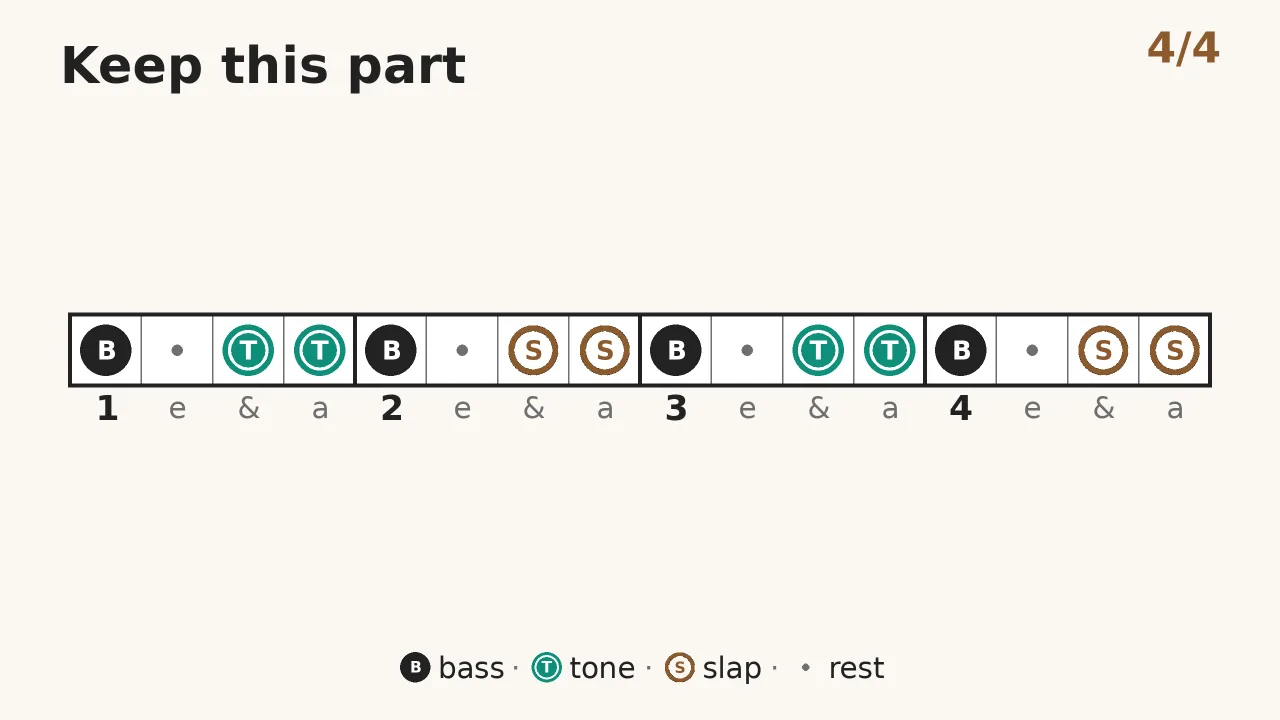
- Bass
- Rest
- Tone
- Tone
- Bass
- Rest
- Slap
- Slap
- Bass
- Rest
- Tone
- Tone
- Bass
- Rest
- Slap
- Slap
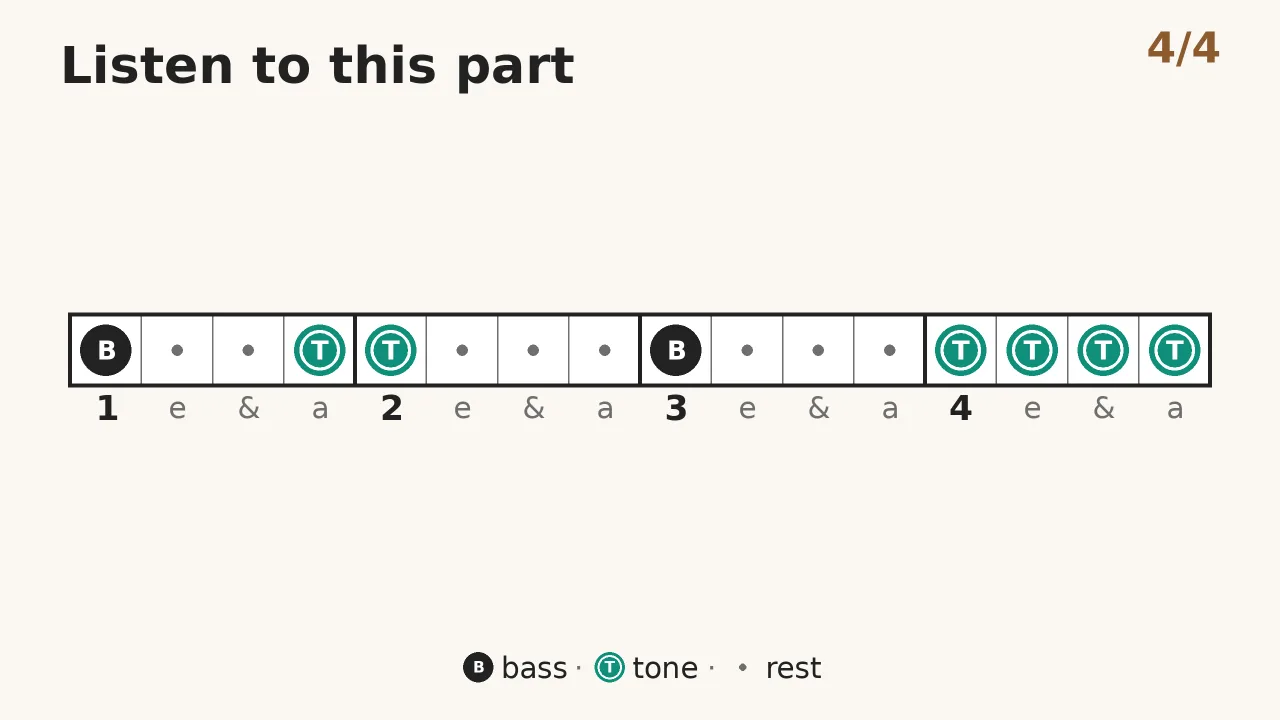
- Bass
- Rest
- Rest
- Tone
- Tone
- Rest
- Rest
- Rest
- Bass
- Rest
- Rest
- Rest
- Tone
- Tone
- Tone
- Tone
Two parts sharing the same four beats
Hear the ending without borrowing it
On beat 4, the reference voice plays four tones. Your part still plays bass, rest, slap, slap. Listen to its tone run as a landmark leading into the next 1, not as an instruction to replace your strokes.
The basses meeting on 1 and 3 help you check alignment. If your hands start copying the other voice, revisit your solo clip, then bring back the quiet second part.
Gradually remove the guide
The games below keep the same two parts. First use full guidance for four cycles. Then stay at 50 BPM for eight cycles while the guide fades after the second bar. The reference part continues.
These rounds start with the game’s own preparation, not our separate practice cue. Use the audio above for the entrance skill and the games for keeping your place over time.
In the app: 2 self-check exercises. Get the app
Finish with a comfortable, uninterrupted run
Eight stable cycles at 50 BPM meet today’s main goal. When that feels easy, the final level offers sixteen cycles at 60 BPM—about one minute—with no guide. Stay at 50 BPM if the faster version makes your hands tense.
If you lose your place, use Keep Your Place: stop uncertain strokes, listen to the reference’s final tone run, silently rehearse the next 1 and return. Do not rush to replace missed notes. After practising recovery, restart for a fresh uninterrupted attempt.
In the app: a self-check exercise. Get the app
Check the sound on your own drum
A screen score checks your inputs, not the quality of your physical strokes. On your djembe, listen for distinct basses, tones and slaps, comfortable hands and a stable four-beat cycle.
With a partner who knows the reference part, ask for the same adapted cue, then play eight cycles together at 50 BPM. Keep both players audible. Without a partner, practise the entry clip and the sustained pattern separately; do not treat the screen result as proof of your acoustic sound.
Quick check
1 more question in the app Get the app